Digital marketing for a political campaign means reaching the voters who decide your race, on the screens they use, with a message built for your district. Before any ad runs, build five things: voter and district research, a race-specific message, compliant targeting, an early start, and a plan that adjusts as results come in.
Key takeaways
- It is more than Facebook ads. Campaign digital marketing covers Meta, Google, YouTube and X ads, streaming TV, email and text, and the creative behind them.
- Platform approval comes first. Meta requires authorization and a “Paid for by” disclaimer. Google’s election ads verification is in the campaign’s name, not the agency’s.
- Florida law covers paid online ads. A paid ad that expressly advocates for a candidate generally needs the statutory disclaimer.
- Ads have jobs they do well. Reach, repetition, reminders, sign-ups and measurement. The average persuasion effect of political advertising is small, so plan around those jobs.
- Start early and stay visible. Florida mails requested ballots 40 to 33 days before primary and general elections, and early persuasion fades.
What does digital marketing for a political campaign include?
Political campaign digital marketing puts your name on the phone in a voter’s hand and on the living room TV, through paid ads, your own email and text lists, and the creative behind them. Pew Research Center’s 2025 survey found that 91 percent of U.S. adults own a smartphone.
| Channel | Its job in a campaign |
|---|---|
| Facebook and Instagram ads | Reach people in your district by location, age and gender, plus your own supporter lists |
| Google Search ads | Show up when voters search your name, your race or your issue |
| YouTube and streaming TV | Put video on phones and TV screens, with streaming spots targeted by ZIP code, county or congressional district |
| X ads | Promote posts and video once the account is certified for political ads |
| Email and text | Recruit volunteers, raise money, and remind supporters about mail ballots, early voting and Election Day |
| Video, images and copy | The scripts, graphics and ad copy every channel depends on |
| Social media posts | A steady calendar of posts on the candidate’s own accounts, created and scheduled |
Advocacy Aces is a digital advertising and creative agency for law firms and political campaigns, working in English, Spanish and Haitian Creole. We run political digital advertising on Meta, Google, YouTube and X, streaming TV ads targeted by ZIP code or district and get-out-the-vote emails and reminder texts, plus the creative behind them.
Whoever you hire, two things should hold. The campaign owns its ad accounts. And ad spend goes from the campaign directly to the platforms, separate from any agency fee. That is how we work.
Why build it before launch?
Because by the time voters see your name, the real work is already finished. A flight without a pre-flight check does not get off the ground safely. Neither does a campaign.
Three parts of that pre-flight check decide how early you have to start.
The platforms have to approve you
Meta requires anyone running ads about social issues, elections or politics to complete its authorization process and include a verified “Paid for by” disclaimer. Ads missing a required disclaimer are disapproved.
Google verifies the end advertiser, not the agency, and its election ads application can take two steps of up to five business days each. X requires certification before political ads run. Put approvals at the top of your plan.
Voting starts before Election Day
Florida supervisors of elections mail requested ballots to domestic voters between the 40th and 33rd days before primary and general elections. Early voting runs from the 10th to the 3rd day before an election with state or federal races, and supervisors may add days.
Your election is really a voting window that opens more than a month early. Our Florida campaign advertising timeline counts back from those dates.
Research and message take real time
The first two builds below cannot be done well in a weekend, and everything else depends on them. The campaign that looks easy on the surface ran the hardest mile early.
Build 1: Who are the voters who decide your race?
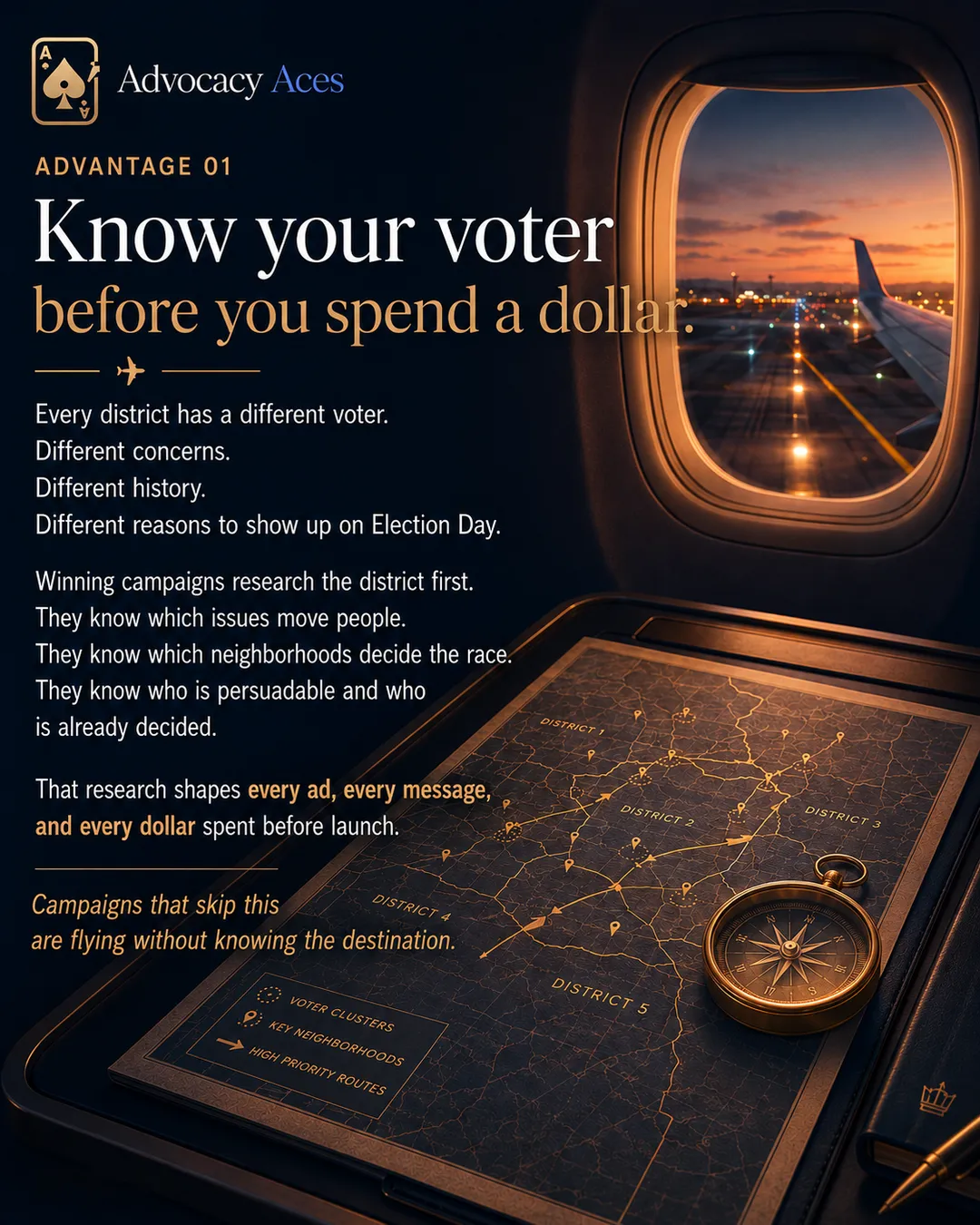
Every district has a different voter. Different concerns. Different history. Different reasons to show up on Election Day. Research those voters first, because what you learn shapes every ad, every message and every dollar spent before launch. In Florida, much of that research is public record.
Step 1: Read past results precinct by precinct
County Supervisors of Elections publish past results. In Broward County, the election night reporting site breaks each race down by precinct and by Election Day, early and mail votes.
Pull the last two or three elections for your seat. Which precincts carried the winner? Where were the most votes cast? How much came in by mail? Our case study on three Tamarac City Commission elections with certified results for Marlon Bolton is built from those county records.
Step 2: Get the voter file
Voter registration and voting history information is public record under Florida law, and the Division of Elections takes requests for its voter extract, with some information exempt. Use it to size your electorate and see who actually votes.
Step 3: Follow the money in past races
Florida’s state campaign finance database covers candidates for multi-county offices, except U.S. Senate and House, and points local candidates to county or city filing offices. Congressional candidates report to the Federal Election Commission, which publishes how federal candidates raise and spend money.
You are not looking for a number to copy. You are looking for what past campaigns in this race bought, and when.
Step 4: Name your audiences and their languages
Sort voters into your base, persuadable voters, and supporters who do not vote every time. Our guide to base, persuadable and low-turnout voters covers each group.
Then ask which language each group reads at home. When we ran Meta ads in English, Spanish and Haitian Creole, language turned out to be a targeting decision, not a translation task.
Build 2: What message is built for this race?
A message built for this race names the district. Names the issue. Names the reason this election matters to the people deciding it. A slogan that could run in any district rarely gives a voter a reason to pick you.
Test it. Cover the candidate’s name and read the ad. If your opponent could run it with their own name swapped in, it is not a message yet.
Step 1: Write the one-sentence reason
Fill in the blanks: “In [district], [issue] affects [who], and I am running for [office] to [specific action].” If a bracket stays vague, go back to Build 1.
Step 2: Prove it with local detail
Name a street, a school, a past vote or a budget line. Local detail makes the claim believable and hard for anyone else to borrow.
Step 3: Cut it for each format
The message has to work in a video’s first seconds, in a carousel ad, in a search headline and in a text. Every version is written for your race, not borrowed from someone else’s. That is our approach to campaign ad copy and video scripts.
Step 4: Check the words Florida regulates
Section 106.143 of the Florida Statutes turns some wording choices into legal ones:
- Partisan candidates must state their party. Nonpartisan candidates may not, and school board elections are nonpartisan.
- A candidate who is not the incumbent may not say “re-elect,” and the ad must put “for” between the name and the office.
- Saying a person or group supports you requires their specific written approval.
- An ad in a language other than English may give the disclaimer in that language.
Our guide on how to write a campaign message voters remember goes deeper.
Build 3: How do you target voters within platform rules?
You target within what each platform allows for political ads, and the allowed list is different on each one: location, age and gender on both Meta and Google, your own supporter lists and lookalike audiences on Meta, and contextual placements, topics and keywords on Google.
| Platform | Targeting allowed for political ads | What not to expect |
|---|---|---|
| Facebook and Instagram | Location, age and gender, Custom Audiences and lookalike audiences, per Meta’s guidance when it removed political beliefs targeting starting January 19, 2022, plus customer lists you upload | Targeting by political beliefs or affiliation |
| Google Search, YouTube and Display | Geographic location except radius, age, gender, and contextual placements, topics and keywords | Radius targeting or anything outside that list |
How to set it up
- Start with geography. Check how closely the areas you can select match your district lines before you set a budget.
- Add age ranges only when your research gives you a reason.
- Upload lists you have the right to use, such as supporters, volunteers and donors, as a customer list Custom Audience. Meta hashes the emails, phone numbers or addresses you provide and matches them to profiles, and more information gives a better match rate, so not everyone on a list will be found.
- Build a lookalike from your best list to reach people who resemble your supporters.
- Write down each choice and the reason for it, so you can judge it against results.
Never promise, or accept a promise, that ads will reach “exact voters” or “only registered voters.” Targeting sets the audience. It does not guarantee that every person in it sees your ad. For the full Meta setup, read Facebook and Instagram ads for political campaigns.
Build 4: How do you stay visible from launch through Election Day?
You stay visible by running without a gap from the day your ads are approved to the day polls close, with the most weight on the weeks when ballots are in voters’ hands. The best time to start was months ago. The next best time is now. Starting late does not mean losing. It means working much harder to catch up.
The research backs an early start, with a catch. Kalla and Broockman found that when campaigns contact voters long before Election Day and measure right away, some persuasion appears, but it decays. Early visibility is a head start you have to keep up, not money in the bank.
Familiarity matters where voters know little. Kam and Zechmeister found that name recognition positively affects political support in low-information races. A short burst will not build it, though. In randomized experiments, week-long, high-volume Facebook ads for legislative candidates left voters no more likely to recognize or positively rate them. Our guide to name recognition in politics covers the longer plan.
A simple sequence, counted back from a Florida election:
- Before launch: research, message, and Meta, Google and X approvals.
- Before requested ballots go out, 40 days before a primary or general election: ads running long enough that your name is familiar when ballots arrive.
- Through mail and early voting: reminders to return ballots and vote early, with your main message still running.
- Before the final week: for the 2026 midterms, Meta said it will block new political ads in the final week of the U.S. election campaign, while ads with at least one earlier impression can keep running. Have closing ads delivering before then.
- Election Day: reminder texts, emails and the ads already live.
That is not luck. That is timing.
Build 5: How does the plan adjust when the race moves?
A real campaign plan does not freeze when something changes. It adjusts. New data comes in. The message shifts. The targeting tightens. That is what separates a campaign that is managed from one that is just running, and it is the standard we hold ourselves to.
Adjusting is a weekly habit:
- Refresh creative every week, so voters see new angles on the same message instead of one tired ad.
- Judge each ad by its job. Judge reach ads on reach and cost per thousand impressions, and click ads on clicks.
- Walk through the report together. A dashboard link is not a review.
- Study the race in public. Meta’s Ad Library shows election and political ads with spend, reach and funding entities, and Meta keeps them for seven years. Your opponents can see yours too.
- Move budget, not just words. Back what works and pause what does not.
If your campaign has been boosting posts, read why a boosted post is not a funnel. If your team runs its own ads, we offer media planning and messaging frameworks so the plan stays in your hands.
How does this change for city commission and school board races?
A local election strategy uses the same five builds on a smaller map, with a few differences:
- Dates are set locally. Local elections may be held throughout the year in Florida. Confirm yours with your county Supervisor of Elections or city clerk.
- Party labels may be off limits. A school board campaign strategy has to work without a party label, because those races are nonpartisan. Check whether your city race is too.
- Platform rules still apply. Meta’s policy covers ads made by, on behalf of or about a candidate for public office. Google’s U.S. election ads definition names federal and state-level offices, so read it for your race rather than assume either way.
- Familiarity carries weight. Kam and Zechmeister note that low-information races make up the majority of decisions voters cast ballots on.
- The research is manageable. A city commission campaign strategy can start from one district’s precinct results and voter file, which a small team can study in detail.
For how voters choose when they know little about the candidates, see how voters decide in down-ballot races.
What jobs should digital ads do for a campaign?
Reach, repetition, reminders, sign-ups and measurement. Those are the jobs. Be skeptical of anyone who promises that ads will also change minds.
- Kalla and Broockman concluded that the best estimate of the effects of campaign contact and advertising on candidate choice in general elections is zero.
- Across 59 experiments with 34,000 people testing 2016 presidential campaign ads, political ads had small average effects on candidate favorability and vote, in primaries and general elections alike.
- A 2018 Florida field experiment with Facebook and Instagram ads seen more than 1.1 million times found very small estimated effects on vote share.
Small is not zero, and close races turn on small numbers. In an experiment during Dallas’s 2017 municipal elections that randomly assigned 74,102 registered voters aged 23 to 35, researchers estimated that seeing both kinds of targeted online ads raised turnout 0.91 percentage points in competitive districts. Those ads promoted election coverage or encouraged people to vote. Reminding people to vote is one of the jobs below.
Scale and repetition are what digital does best. Here is what each job looks like in a race:
| Job | What it looks like |
|---|---|
| Reach | Your name and message across the district, on the screens voters already use |
| Repetition | The same name, face and message over weeks, in each language your voters use |
| Reminders | Mail ballot, early voting and Election Day prompts by ad, email and text |
| Sign-ups | Volunteers, email and text subscribers, and donors |
| Measurement | Impressions, clicks and cost per result, reviewed weekly |
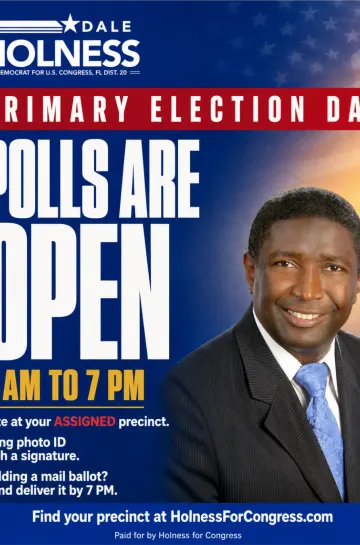
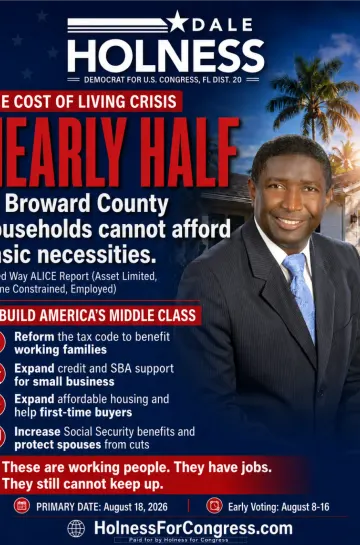
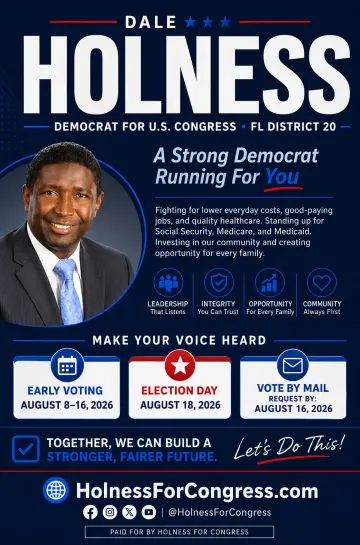
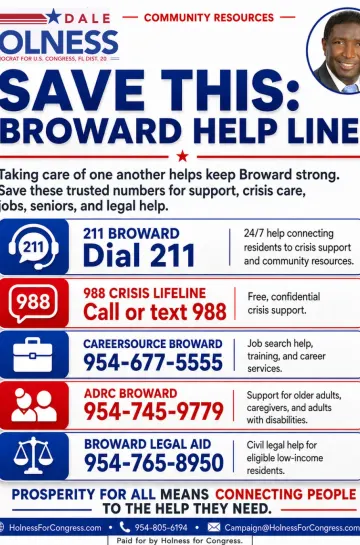
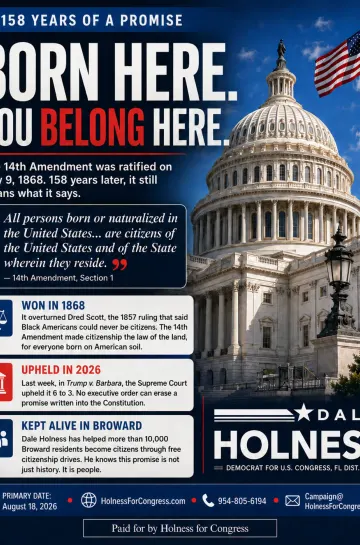
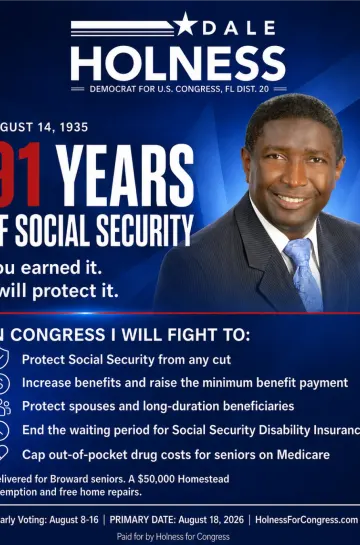
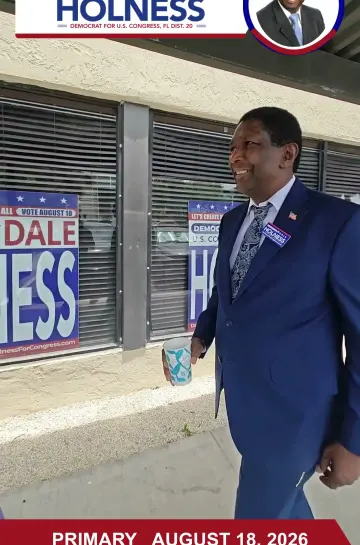
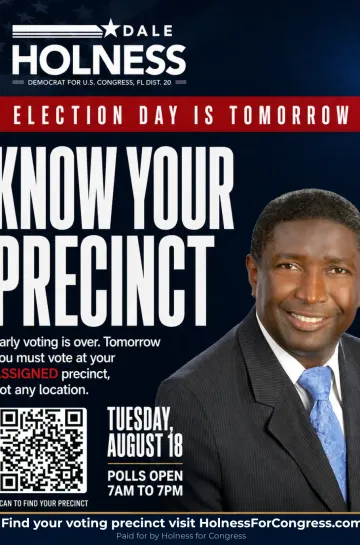
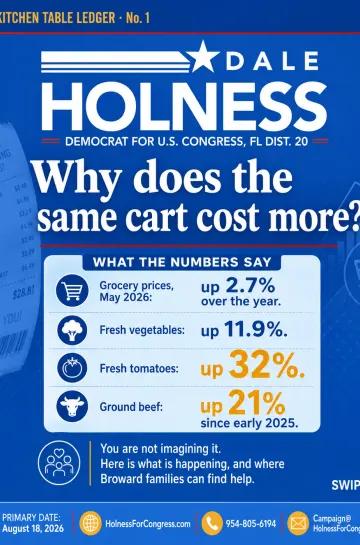
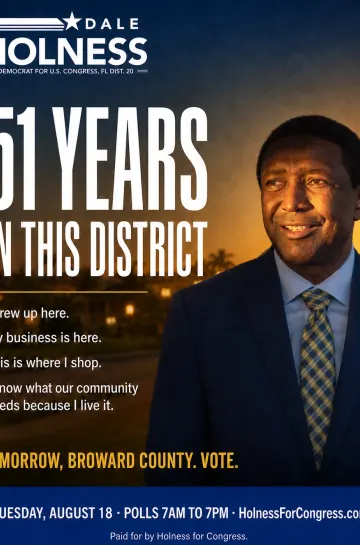
The Dale Holness program showed us how these jobs play out. We ran his Meta ads in the August 18, 2026 Democratic primary for U.S. House, Florida District 20, where he finished second. Here is what we learned. The Haitian Creole ads were the smallest share of the spend and produced the cheapest link clicks, while the Spanish ads cost more per click than the English ones. Language is targeting, not a discount. Reach ads and click ads did different jobs, and a campaign needs both. And a message has to give voters a choice, not only a strong resume.
Which rules apply to a Florida campaign’s digital ads?
| Rule | Applies to | What it requires |
|---|---|---|
| Fla. Stat. 106.011 | Florida political ads | The Internet counts as a communications medium, and a political advertisement is a paid expression that expressly advocates the election or defeat of a candidate |
| Fla. Stat. 106.143 | Florida candidates’ ads | “Political advertisement paid for and approved by” or “Paid by,” with name, party and office, and no party in nonpartisan races. Exceptions include paid links of 200 characters or fewer that lead to a compliant site, and messages on an unpaid public profile or account or a social networking site when the source is patently clear from the content or format |
| Fla. Stat. 106.145 | Deceptive generative AI content | “Created in whole or in part with the use of generative artificial intelligence (AI).” when AI content appears to show a real person doing something that did not happen and was made with intent to injure a candidate or deceive about a ballot issue |
| FEC disclaimer rules | Federal candidates | Clear and conspicuous disclaimers on paid internet ads, written disclaimers on text and image ads unless an adapted disclaimer applies, and at least four seconds on video. Federal-only ads do not have to follow state or local disclaimer laws |
| Meta | Election and political ads on Facebook and Instagram | Authorization, a verified “Paid for by” disclaimer, a public Ad Library record, and, for the 2026 midterms, no new political ads in the final week of the U.S. election campaign |
| U.S. election ads | Verification of the end advertiser, an automatic “Paid for by” for most formats that does not replace disclosures required by law, and limited targeting | |
| X | Political campaigning ads | Certification before ads run, and the advertiser alone is responsible for following disclosure laws |
This is marketing guidance, not legal advice. Rules change, and your race may involve details a summary cannot cover. Confirm your ad copy and disclaimers with your campaign counsel or your filing officer before anything runs.
Where does Advocacy Aces fit?
We are a Florida-first agency for campaigns and law firms, and we build these five pieces as one plan:
- One client per race. We never work for a client’s direct competitor.
- Three languages. Ads and creative in English, Spanish and Haitian Creole.
- One team for the whole channel. Targeting, copy, creative, media buying and reporting, with a weekly creative refresh.
- Your accounts and your spend. You keep ownership of your ad accounts and pay the platforms directly.
- Reporting you are walked through, not just a dashboard link.
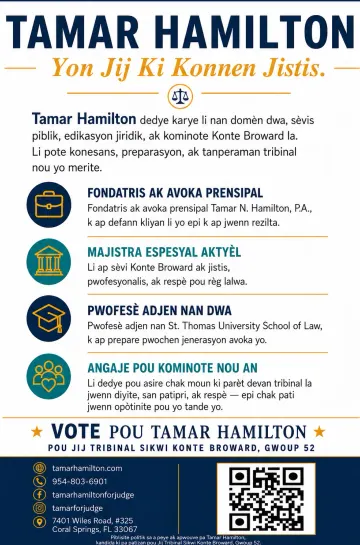
- Four case studies, told straight: Marlon Bolton’s three Tamarac City Commission races, Dale Holness’s Meta program in three languages, the website and Meta ads for Tamar Hamilton’s Broward County judicial campaign, and video ads for Claxton Law Group, an immigration law firm.
Tell us about your race and your election date, and we will talk through what to build first. Schedule Consultation
This article is marketing guidance, not legal advice. Election, platform and bar rules change, so confirm the details with your campaign counsel, filing officer or bar before you rely on them.