Good voter targeting plans for three audiences: base voters who already support you and need reminders, persuadable voters who are still deciding and need a reason to choose you, and supporters with a spotty voting history who need help turning out. Give each its own message and timing, and build every audience within each ad platform’s political rules.
Key takeaways
- Base voters already support you. Give them reminders and jobs, not arguments.
- Persuadable voters are hard to move. Large studies find the average effect of ads and campaign contact on vote choice is small, so lead with one clear reason.
- Low propensity describes voting history, not support. Your turnout target is supporters who vote unreliably.
- Reminders have evidence. In a nationwide field experiment, text message reminders produced a 3.0 percentage point increase in the likelihood of voting, so build a reminder calendar around real deadlines.
- Platform rules shape every audience. Meta removed political-belief targeting in 2022, and Google limits election ad targeting to location, age, gender and context.
Who are your base voters and what do they need?
Your base voters are the people who already support you. They need reminders, not convincing. Keep them motivated and keep them showing up.
It is easy to get this wrong in two directions: spending your best arguments on people who were never in doubt, or assuming the base will turn out on its own. Your base is the most willing source of time, money and word of mouth your campaign has.
Give every base voter a job
A supporter who only hears “thanks for your support” has nothing to do. Give every base message one clear ask.
| Job | What the ask looks like |
|---|---|
| Volunteer | Join the text team or sign up to help at an event |
| Donate | Give before a named fundraising deadline |
| Share | Send the new video to three friends in the district |
| Vote early | Make a plan to vote early or by mail, with the dates in the message |
| Pass it on | Send your reminder to a family member or friend who does not always vote |
The last job matters more than it looks. Your supporters may know people who lean your way but do not always vote, and those are exactly the people a turnout reminder is built for.
Where to reach your base
- Your own lists. Email and text go straight to people who opted in.
- People who already engaged. Meta lets advertisers build Custom Audiences from website visitors and people who engaged on Facebook, and Engagement Custom Audiences from people who watched their videos.
- Retargeting on Facebook and Instagram. Someone who watched most of your video last week is a better prospect for a volunteer ask than a stranger. It is a core part of our audience building and retargeting for campaigns.
Who are persuadable voters, and how much can ads move them?
Persuadable voters have not decided yet. They are weighing their options, which makes them the most tempting place to spend. Spend there with clear eyes, because the research on persuasion is humbling.
- General elections. Joshua Kalla and David Broockman analyzed 40 field experiments and ran nine of their own. They argue that “the best estimate of the effects of campaign contact and advertising on Americans’ candidates choices in general elections is zero.” Persuasion appeared in two rare cases: when candidates took unusually unpopular positions and campaigns invested unusually heavily in identifying persuadable voters, or when contact came long before Election Day and was measured right away. That early persuasion decayed.
- Primaries and generals alike. Alexander Coppock, Seth Hill and Lynn Vavreck tested 49 ads from the 2016 presidential campaign in 59 experiments with 34,000 people. They found small average effects on candidate favorability and vote, similarly small in the primary and the general election.
None of this makes persuasion pointless. It means you plan it as an honest budget line with modest expectations, not a lever that flips a race on its own.
1. Lead with one clear reason
Give this group clarity and a reason to choose you. A voter scrolling past your ad will not piece together your platform from five slogans. Pick the single reason that matters most to the voters you want and say it plainly. Our guide on how to write a campaign message voters remember shows how to find it.
2. Stay consistent and stay present
Early persuasion faded in the Kalla and Broockman experiments. If you start early, keep the same reason in front of voters through Election Day, in your ads, your videos and your social posts, instead of running one burst and going dark. For pacing, see when a campaign should start advertising.
3. Set goals you can measure
Do not judge a persuasion ad by whether a poll moved the next morning. Judge it by what you can see: whether people watched, visited the page that explains your reason, and signed up.
What is a low-propensity (low-turnout) voter?
A low-propensity voter is someone whose voting history suggests they may skip a given election. Propensity is about how often a person votes. It says nothing about who they support.
That distinction matters. Your hidden votes are the supporters who just do not always show up. That is the right target, but it is only part of the low-propensity pool. A low-propensity voter who backs your opponent is not someone you want to remind. Your reminder budget belongs to supporters who vote unreliably.
To find them, combine two kinds of information:
- Voting history tells you who might stay home.
- Support signals tell you who leans your way: people who signed up, donated, volunteered or engaged with your content.
The overlap is your turnout audience.
What does the research say about reminders?
Reminders are what move this group. Three studies measured what different kinds of outreach did to turnout.
| Tactic | Study | What it found |
|---|---|---|
| Text message reminders | Nationwide field experiment, 2006 election, 8,053 people (Dale and Strauss) | A 3.0 percentage point increase in the likelihood of voting |
| Online ads | 2017 Dallas municipal elections, registered voters aged 23 to 35 who had voted in 2014 or 2016 (Haenschen and Jennings) | In competitive districts, turnout among voters targeted with both kinds of ads was 0.52 percentage points higher, which the researchers estimate as a 0.91 percentage point increase after adjusting for the 57.7% of voters matched to the cookie database |
| Large social media persuasion program | 2 million moderate- and low-information persuadable voters, five battleground states, 8 months, 2020 presidential cycle (Aggarwal and colleagues) | No evidence the program increased or decreased turnout on average |
The Dallas ads were banners and videos that did not run on social media platforms such as Facebook, and they came in two kinds: one promoting a newspaper’s election coverage, one encouraging people to vote. Neither promoted a candidate. The program that found no turnout effect on average was built to change minds, not to remind. The clearest turnout effect came from a short reminder sent straight to a voter’s phone, which is exactly the job a get-out-the-vote text is built to do, so that is where a turnout budget starts.
When should reminders go out?
Send reminders on the dates that give a voter something to do. Tie each one to a real deadline and answer three questions: when, where and how. One test fits every reminder: make it easy to vote and hard to ignore.
In Florida, the Division of Elections publishes the key dates. For the November 3, 2026 general election, its election dates page lists September 24 to October 1 as the window for sending vote-by-mail ballots to domestic voters, an October 22 deadline to request a mailed ballot, and a mandatory early voting period of October 24 to 31, with optional early voting days set locally by each county Supervisor of Elections.
Build reminders around those moments:
- When mail ballots go out: fill out the ballot and send it back.
- Before the request deadline: request your mail ballot in time.
- When early voting opens: locations and hours from the county Supervisor of Elections.
- On Election Day: the polling place lookup and a plain reason to go.
One platform rule shapes this calendar. Meta says it will block new political, electoral and social issue ads during the final week of the US election campaign, while ads that recorded at least one impression before then can keep running. Get your Election Day reminder ads approved and delivering before that final week starts.
Texts belong on the same calendar. We write and build get-out-the-vote and reminder text messages inside the texting tools a campaign already uses. Have your campaign counsel review your list and sending method before the first send.
How do you build these audiences on Facebook, Instagram and Google?
Start with what the platforms allow, because the rules decide which audiences you can build.
Meta: Facebook and Instagram
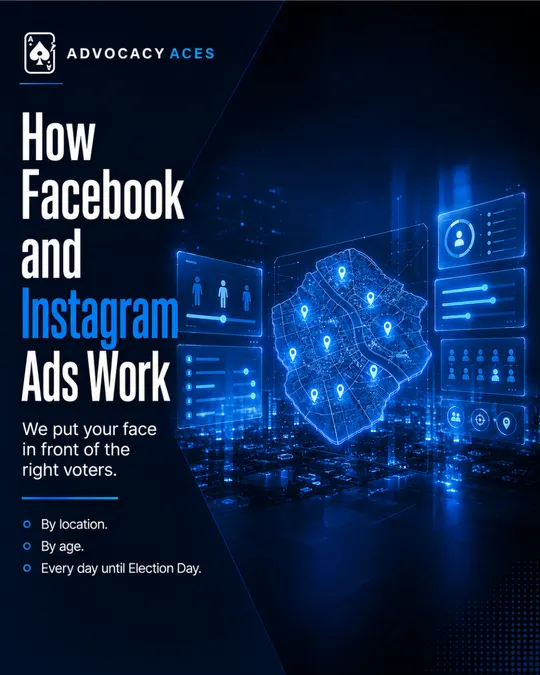
On January 19, 2022, Meta removed detailed targeting options tied to topics people may perceive as sensitive, including political beliefs, social issues, causes, organizations and political figures. You cannot pick a party’s supporters from a targeting menu. In its guidance on the change, Meta pointed advertisers to these options instead:
- Broad targeting by age, gender and location.
- Custom Audiences of people who already know you, such as website visitors and people who engaged on Facebook.
- Engagement Custom Audiences, such as people who watched your videos.
- Lookalike audiences that reach new people similar to an existing Custom Audience. Meta’s own example is a candidate building one from a donor list.
Meta describes Custom Audiences as finding your existing audiences “among people who are on Facebook,” so an audience built from your supporters includes only the people the platform can find, and nobody can honestly promise how many. Location targeting reaches people in an area, not a roll of registered voters. Be wary of any promise that your ads will reach only registered voters.
Google: Search, YouTube and Display
Google’s political content policy requires US election advertisers to complete verification and limits election ad targeting to geographic location (except a radius around a location), age, gender, and contextual options such as placements, topics and keywords. Supporter lists and remarketing are not on that list, so on Google you reach voters through where they are and what they are looking at.
Disclaimers apply to reminder ads too
A get-out-the-vote ad can feel neutral, but Meta’s policy on ads about social issues, elections or politics covers ads about any election, “including ‘get out the vote’ or election information campaigns.” Those ads require Meta’s authorization process and a verified “Paid for by” disclaimer, and ads missing a required disclaimer are disapproved. Google generates a “Paid for by” disclosure for most election ad formats, but says it is not a replacement for disclosures the law requires.
Florida’s campaign finance chapter covers candidates for state, county, municipal, school and other district offices, not federal ones. In those races, a political advertisement paid for by a candidate must carry the wording in section 106.143, such as “Political advertisement paid for and approved by” followed by the candidate’s name, party and office, and a candidate for nonpartisan office may not state a party. Federal campaigns follow the FEC’s disclaimer rules, which require disclaimers to be “clear and conspicuous.” This is marketing guidance, not legal advice, so confirm your exact wording with your campaign counsel or filing officer. For the full setup, see Facebook and Instagram ads for political campaigns.
Can you run different messages to each group at the same time?
Yes, within each platform’s political ad rules. Separate ad sets let your base, persuadable voters and unreliable supporters each see their own message on the same day. The plan comes down to three things: the right message, the right voter, the right moment.
| Audience | Goal | Message | Main channels | Timing |
|---|---|---|---|---|
| Base voters | Mobilize | A specific job: volunteer, give, share, vote early, pass it on | Email, text, retargeting, organic posts | All cycle, heavier before deadlines |
| Persuadable voters | Give a reason | One clear reason to choose you | Location and age targeted video on Meta and YouTube, Google contextual placements | Start early and stay present, since early effects fade |
| Supporters who vote unreliably | Turn out | When, where and how to vote | Text reminders and reminder ads to supporter audiences on Meta | Mail ballots, early voting, Election Day, with ads launched before Meta’s final-week block |
Three habits keep the lanes clean:
- Write separate copy for each audience. Persuasion and reminder ads do different jobs, so we write separate ad copy for each voter audience.
- Limit overlap where the platform allows exclusions. A supporter already getting reminders does not need your persuasion ad.
- Keep one story underneath. A voter who moves from persuadable to supporter should recognize the reason that brought them over.
What about voters who speak Spanish or Haitian Creole?
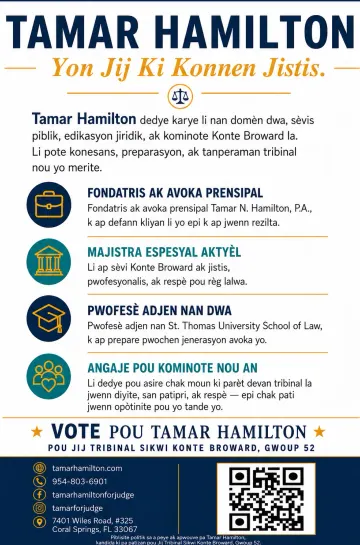
Treat each language as its own audience, with its own creative and its own ad sets. A translated caption on an English video is not an ad made for a voter who speaks Spanish or Haitian Creole at home. Have a native speaker review every line before it runs.
For state and local races, Florida law makes this practical. Section 106.143(9) says a political advertisement “published, displayed, or produced in a language other than English may provide the information required by this section in the language used in the advertisement.” A Spanish ad can carry its disclaimer in Spanish.
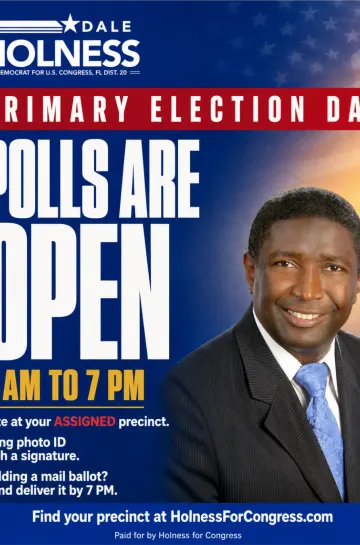
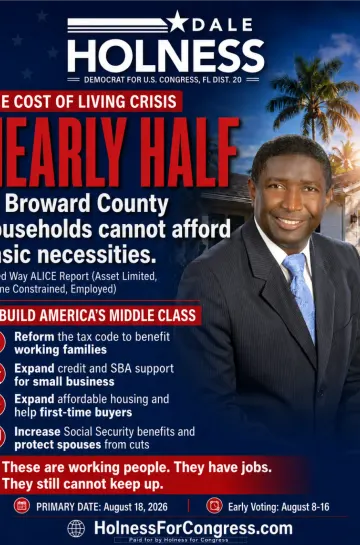
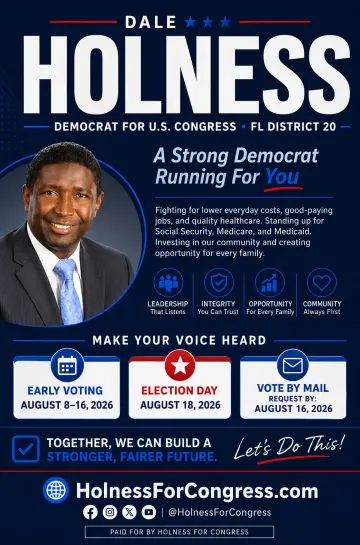
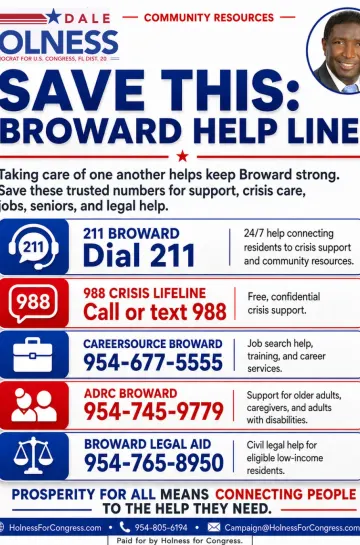
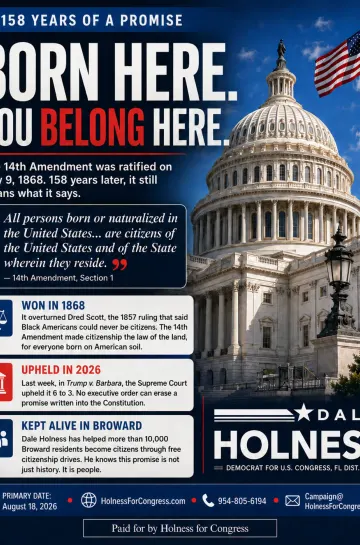
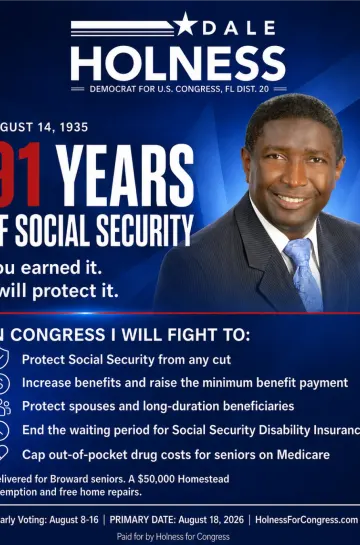
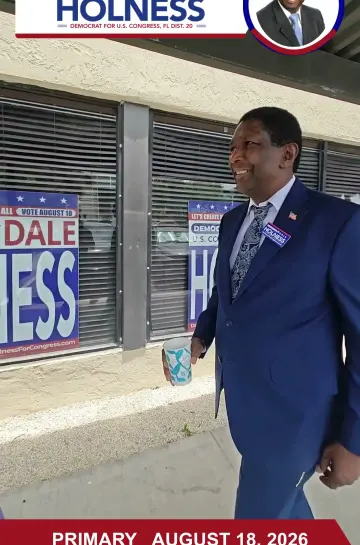
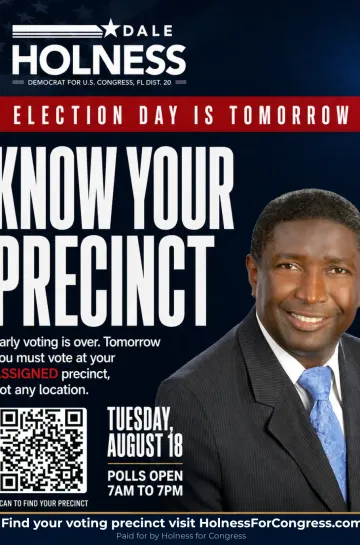
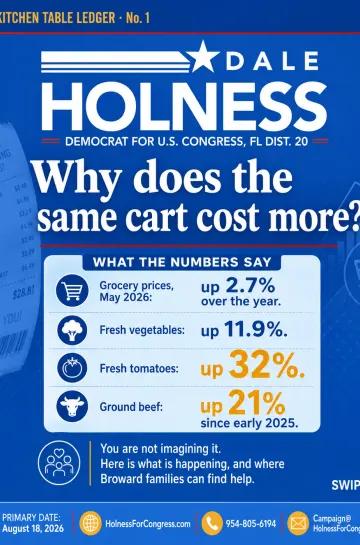
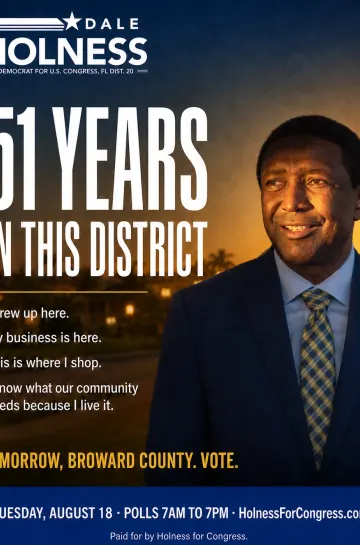
We ran Meta ads in English, Spanish and Haitian Creole for Dale Holness in the August 2026 U.S. House primary for Florida’s 20th District. He finished second. The case study on reaching voters in English, Spanish and Haitian Creole breaks out spend and clicks by language, and our first lesson was simple: language is targeting. The cost of a click differed across the three languages, and language alone was not a discount. You only see that when reporting splits results by language.
How do you know which audience is responding?
Give each audience its own scoreboard. When everything rolls into one campaign total, a strong reminder ad can hide a weak persuasion ad. Here is a simple way to set that up.
Step 1: Name every ad set by audience and language
“Base, Spanish, volunteer ask” tells you what you are looking at. “Ad set 3” does not.
Step 2: Pick one main signal per audience
- Base voters: sign-ups, volunteers recruited, donations and shares.
- Persuadable voters: video views and visits to the page that explains your reason.
- Supporters who vote unreliably: clicks on reminder links, such as early voting locations or the mail ballot request page.
Step 3: Separate reach from clicks
Another lesson from the Holness campaign: reach and clicks are different jobs. Video ads built for reach put the message in front of more people, and ads built for landing page views drove the clicks. Decide which job each ad has before you judge it.
Step 4: Review every week, by audience and language
Compare English, Spanish and Haitian Creole side by side, move budget toward the ads doing their job, and refresh creative that has gone stale. A click is interest, not a vote, so read every number for what it is.
How Advocacy Aces helps
Advocacy Aces is a digital advertising and creative agency for law firms and political campaigns, working in English, Spanish and Haitian Creole. One team owns the whole channel: targeting, copy, creative, media buying and reporting. For these three audiences, that means:
- Audience building on Facebook, Instagram, Google Search, YouTube and X from location, demographics, lookalikes and supporter data, plus retargeting, within each platform’s political ad rules.
- Copy for each audience, AI-assisted and edited by a writer in your voice.
- Get-out-the-vote and reminder texts, built inside the tools you already use.
- Creative in English, Spanish and Haitian Creole.
- Reporting you are walked through, not just a dashboard link.
You keep ownership of your ad accounts, and we take one client per race. For the wider plan, read our guide to digital marketing for political campaigns. If you are building a plan to reach all three audiences, we can help.
This article is marketing guidance, not legal advice. Election, platform and bar rules change, so confirm the details with your campaign counsel, filing officer or bar before you rely on them.