Facebook and Instagram let campaigns reach people by location, age and gender, or through Custom Audiences of people who already know the campaign. Before a political ad runs, the advertiser must complete Meta’s authorization and add a Paid for by disclaimer. Meta also blocks new political ads in the final week of the US election campaign.
Key takeaways
- Meta allows political ads in the United States. The advertiser must complete authorization, and each ad needs a verified “Paid for by” disclaimer or it is disapproved.
- Since January 2022, you cannot target people by political beliefs. Campaigns build audiences from location, age, gender, their own lists and lookalike audiences.
- In Florida, a paid online ad that expressly advocates for a candidate is a political advertisement and needs the wording in section 106.143. Federal candidates follow FEC rules.
- Meta blocks new political ads in the final week of the US election campaign. Launch every ad you will need for that week before the window opens.
- Use Meta for reach and repetition over weeks, reminders, sign-ups and measurement. One heavy week of ads will not make voters know your name.
Where are voters paying attention?
For most adults, the answer starts with a phone.
Pew Research Center’s 2025 survey of 5,022 U.S. adults found that 71 percent say they ever use Facebook, half use Instagram and 84 percent use YouTube. The same survey found that 91 percent own a smartphone. These are national figures for all adults, not a count of the voters in your district. Still, they make the case for putting Facebook and Instagram on almost any campaign’s plan.
What a phone gives you is a place to show up again and again, in front of people in your area, on a schedule you control. For where Meta fits in a full campaign plan, see our guide to digital marketing for political campaigns.
How do Facebook and Instagram ads work for a campaign?
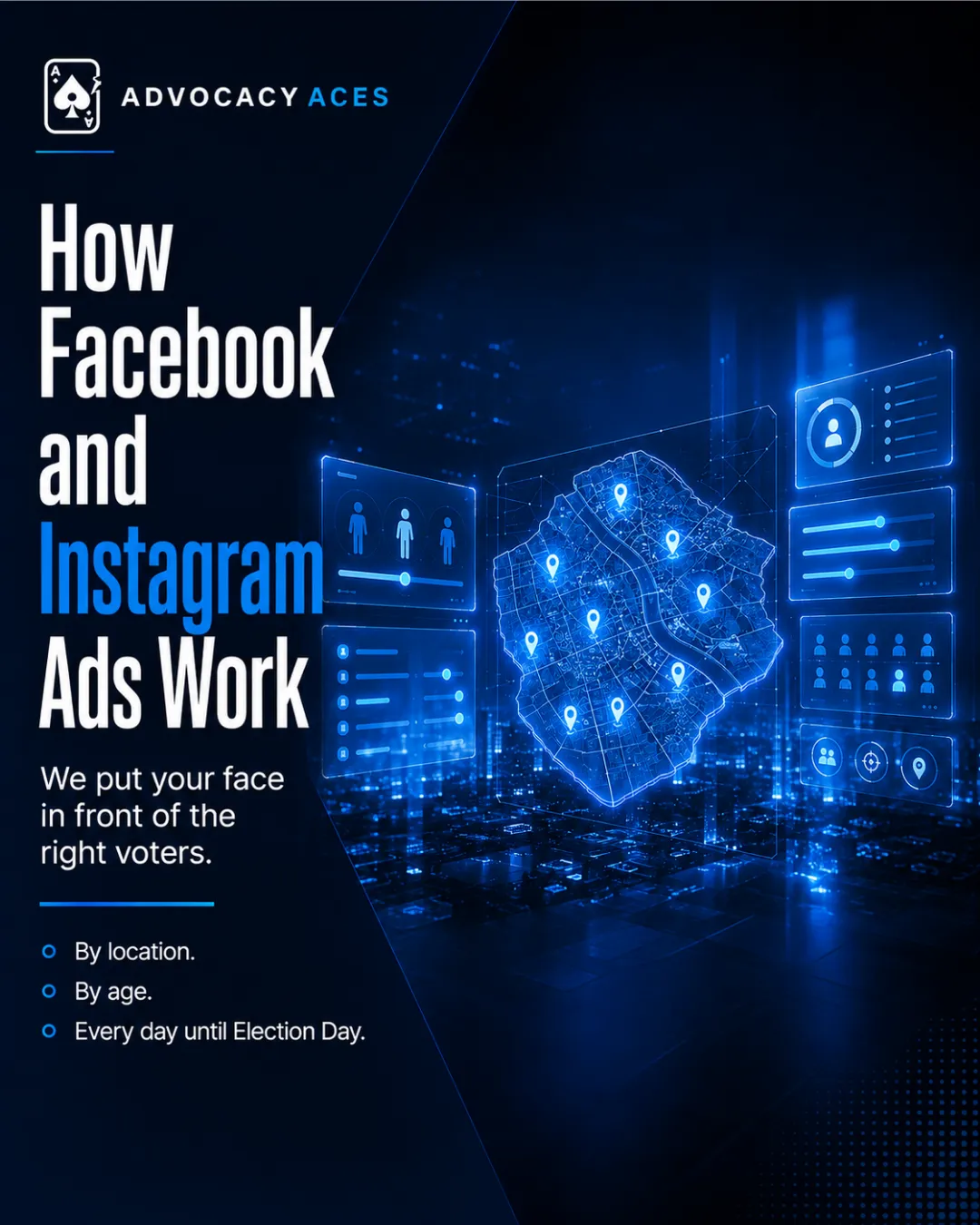
We put your face in front of the right voters, by location and by age. That is the core of how Facebook ads for political campaigns work. You decide who sees the ad, what they see, and how much you spend over how many days. Meta then delivers the ad to people in that audience. One audience can serve both apps. Meta says a customer list audience, for example, lets you advertise on Facebook and Instagram.
The audiences a campaign can build
| Audience | What it is | How campaigns use it |
|---|---|---|
| Location | People who live in, recently spent time in or often go to countries, regions, cities, postal codes and U.S. areas such as congressional districts | Draw your district, or the parts of it your plan needs |
| Age and gender | Part of what Meta calls broad targeting | Narrow delivery to the age groups your plan calls for |
| Customer list Custom Audience | Identifiers you collected, such as email, phone number and address, which Meta hashes and matches to profiles | Supporters, volunteers, donors and event sign-ups |
| Engagement Custom Audience | People who engaged with you, such as people who watched your videos | Follow up with voters who watched your introduction video |
| Lookalike audience | New people who share characteristics with an existing Custom Audience | Find more people like the supporters you already have |
Options change over time, so confirm what Ads Manager offers your account before you build a plan around one of them.
What about local districts?
Meta added congressional districts based on the 2020 census to location targeting in 2022. A city commission seat, a school board district or a state legislative district may not show up as a named option. When it does not, build the area from the cities and ZIP codes inside it, or start from a list of supporters. Check how closely the areas you pick line up with the district map, especially at the edges.
Location targeting is not a fence. Meta’s own help page says you might see some ad impressions from outside your location settings. Plan for a little spillover.
How often voters see your ad, and what you can measure
Your name can show up on a voter’s phone many times before Election Day. How often each person sees an ad depends on your budget, the size of the audience and how long the ad runs.
Your ads keep running while you sleep, and Meta Ads Manager reports each ad’s reach, frequency, impressions, clicks and spend. Our Meta ads in three languages for a congressional primary case study is built from those columns, ad by ad.
What changed about political targeting on Meta?
Starting January 19, 2022, Meta removed detailed targeting options tied to sensitive topics, including “political beliefs, social issues, causes, organizations, and political figures.” You cannot pick an interest in a party or an ideology and aim ads at it.
In the same post, Meta pointed advertisers to alternatives including broad targeting by gender, age and location, Custom Audiences, Engagement Custom Audiences and lookalike audiences. Those are the tools in the table above.
In practice, your targeting is geography, age and gender, plus your own data. That makes list building part of your ad strategy. Every volunteer form, event RSVP and email sign-up gives you an audience to reach later and a base for a lookalike audience. For how to decide who belongs in each audience, see our guide to base, persuadable and low-turnout voters.
What do you need before your first political ad runs?
Meta’s policy covers any ad that is “made by, on behalf of or about a candidate for public office”, along with ads about any election, including get-out-the-vote messages. If you are a candidate, that is every ad you run. Work through these steps in order.
Step 1. Put the Page and ad account in the campaign’s hands
Run ads from the campaign’s own Facebook Page and an ad account the campaign owns, paid with a payment method the campaign controls. If you hire help, give your vendor access, not ownership. That is how we work: the client keeps ownership of their ad accounts, and ad spend is paid directly to Meta.
Step 2. Complete Meta’s authorization
In the United States, advertisers who run ads about elections, politics or social issues are required to complete an authorization process. Meta says that process includes proving who you are and where you live. The Meta pages we reviewed do not promise a processing time, so start early and do not schedule a launch for the day you apply.
Step 3. Create and verify your “Paid for by” disclaimer
Advertisers must include a verified “Paid for by” disclaimer that shows the entity or person responsible for the ad. If Meta decides an ad is about elections or politics and it has no disclaimer, the ad is disapproved in review. An ad that is already running can be flagged by automated systems or reported by users, and if it is missing a disclaimer it is disapproved and added to the Ad Library. Use the committee or candidate name exactly as it appears on your campaign filings.
Step 4. Check whether you need an AI disclosure
Meta requires advertisers to disclose AI use when they create or alter political ads with AI in certain cases, and adds that information to the ad and the Ad Library. Florida has its own rule. Section 106.145 requires a political advertisement to prominently state “Created in whole or in part with the use of generative artificial intelligence (AI)” when its generative AI content appears to depict a real person doing something that did not actually happen and was created with intent to injure a candidate or to deceive regarding a ballot issue. That statement is in addition to the other required disclaimers. A person named in the ad’s disclaimer as paying for, sponsoring or approving it who leaves the statement out where it is required commits a first-degree misdemeanor.
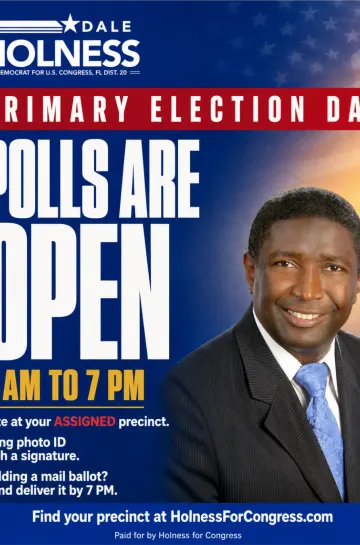
The simplest protection is honest creative. On the Dale Holness program, every piece ran a real photo of the candidate. We used AI for layout and production and said so on the artwork where it applied.
Step 5. Write the legal disclaimer into the creative
Meta’s “Paid for by” label is Meta’s requirement. State and federal election law set their own, so do not assume one satisfies the other. The next section covers Florida and federal rules.
What does a Florida disclaimer need to say on a Facebook ad?
Florida law defines a political advertisement as a paid expression in a communications medium that expressly advocates the election or defeat of a candidate, and its list of communications media includes the Internet. The same section defines an election to include municipal elections and public office to include state, county, municipal, school and other district offices. Read together, a paid Facebook or Instagram ad asking voters to elect you, from city commission to statewide office, falls under Florida’s disclaimer rules.
Here is what section 106.143 requires:
| Situation | What section 106.143 says |
|---|---|
| Ad paid for by the candidate | Must prominently state “Political advertisement paid for and approved by (name of candidate), (party affiliation), for (office sought)” or “Paid by (name of candidate), (party affiliation), for (office sought)” |
| Partisan office | Name the party you are seeking the nomination of or are the nominee of. A candidate with no party affiliation must say so. |
| Nonpartisan office | The ad may not state your party affiliation. Judicial offices are nonpartisan under section 105.011. |
| You are not the incumbent | Do not use “re-elect.” Put the word “for” between your name and the office. |
| Ad in Spanish, Haitian Creole or another language | The required information may appear in the language used in the ad. |
| Endorsements | Do not say a person or group supports you without their specific approval in writing. |
| Ad paid for by someone other than the candidate | Mark it “paid political advertisement” or “pd. pol. adv.”, state the name and address of whoever paid, and state whether it was paid for or provided in kind. Separate wording applies to party in-kind ads, ads made on a candidate’s behalf with the candidate’s approval, and independent expenditures. |
| Message on an unpaid public profile or account, or on a social networking website | Exempt, as long as the source is patently clear from the content or format. We do not rely on it for a paid ad. Confirm with counsel before you do. |
The section also has narrow exceptions for paid text links of 200 characters or fewer and for graphic links too small for the disclaimer, when the link leads to a website that complies. Ask counsel before you rely on either one. A willful violation brings civil penalties.
The no-party rule matters in judicial races, like the one in our case study on Meta ads and a website for a Broward judicial campaign.
What about federal races?
Candidates for Congress follow the Federal Election Commission. The FEC says paid internet ads count as public communications, and an ad paid for and authorized by a campaign must say it was paid for by the authorized committee. Text and image ads need a written disclaimer people can see without taking any action, in readable text. In video, the disclaimer must stay on screen for at least four seconds. When a full disclaimer would take up more than 25 percent of the ad because of the format’s space limits, an adapted disclaimer may be used. For ads only about federal candidates and elections, the FEC says the authorization notice does not have to follow state or local disclaimer laws.
This is marketing guidance, not legal advice. Confirm your exact disclaimer with your campaign counsel or filing officer before your first ad runs.
Does a boosted political post follow the same rules?
Yes. A boosted post is still an ad, so the same rules apply. Meta’s boost settings include a Special Ad Category to turn on “if your ad is about financial products or services, employment, housing, or social issues, elections or politics,” and an ad transparency step to “Verify yourself or an organization to let your audience know who benefits from and pays for this ad.”
Boosting is the quick path, but a campaign usually needs more than one post in front of more than one audience. We explain when a boost is enough and when you need a full funnel in boost post vs Ads Manager: why you need a funnel.
How do you plan Meta ads around the final-week block?
Meta says it will “block new political, electoral, and social issue ads during the final week of the US election campaign.” Ads that recorded at least one impression before that restriction period can keep running. Meta’s reason is that in the final days there may not be enough time to contest new claims made in ads. The announcement does not list calendar dates for the window, and it does not say whether the block covers primaries or local elections held on other dates. Plan as if it applies to your race, and watch for Meta’s notices.
You can stay on voters’ phones through Election Day, but only with ads that started delivering before the final week. Plan for it:
- List every ad you will want in the final week. Early voting reminders, Election Day reminders, your closing message, and a version of each in every language you run.
- Build and launch them early. Get each one approved and delivering before the window opens, so it has recorded impressions.
- Do not count on a late response ad. If something comes up in the final days, plan as if your paid options on Meta are the ads already running.
In Florida, voting starts well before Election Day. For the November 3, 2026 general election, the Florida Division of Elections calendar lists September 24 to October 1 as the deadline to send vote-by-mail ballots to domestic voters, and October 24 to 31 as the mandatory early voting period. Voters who asked for vote-by-mail ballots can have them weeks before Meta’s final-week window. Our Florida campaign advertising timeline counts back from those dates.
How can you see what other campaigns are running?
You do not have to guess whether your opponent is running ads, or what those ads say. Meta publishes them.
For ads about social issues, elections or politics, the Meta Ad Library shows spend, reach and funding entities. These ads stay visible whether they are active or inactive, and they are stored for seven years. Search your race and look for:
- Who is advertising. Which candidates and committees appear, and under which “Paid for by” names.
- What is live. Which ads are active now, and what ran before.
- How much and how far. The spend and reach information Meta shows.
- What they say. The messages, the formats (video, image or carousel) and the languages.
Your own ads are just as public, so write every ad as if your opponent will read it. They can.
What results should you expect from Meta ads?
Expect reach, repetition and numbers you can act on. The field experiments below ask a different question: how far a run of ads moves name recognition, vote share or turnout. They are the reason we plan in weeks and measure every ad.
- In two 2012 field experiments, a state legislative candidate and a congressional candidate showed Facebook ads to randomly selected registered voters, who typically saw many dozen ads over a week-long campaign. Exposure did not increase recognition of the candidate’s name or positive views of the candidate.
- A ZIP code level experiment on Facebook and Instagram during Florida’s 2018 midterm elections produced ads seen more than 1.1 million times. The researchers found very small estimated effects on vote share at the precinct level.
- One study of other online ads found a small turnout gain where the race was competitive. It covered 74,102 registered Dallas voters aged 23 to 35 who had voted in 2014 or 2016, ahead of the city’s May 2017 municipal elections. One group was targeted with ads promoting a newspaper’s election coverage, one with election reminders and one with both, and a control group got no ads. The ads ran across the web but not on social media platforms such as Facebook. Among voters targeted by both types of ads, turnout was 0.52 percentage points higher in competitive districts than in the control group. Because only 57.7 percent of the voters could be matched to the ad cookie database, the researchers estimated the effect of actually being exposed to both types of ads in those districts at 0.91 points. In uncompetitive districts, the difference was not statistically significant.
So do not buy one heavy week of ads and expect voters to know your name. Give your ads jobs they can actually do:
| Job | What it looks like |
|---|---|
| Reach and repetition over weeks | Your face, your name and one clear message, with fresh creative rotated in |
| Reminders | Vote-by-mail, early voting and Election Day reminders, in each language you run |
| Sign-ups and donations | Ads that send people to a landing page to volunteer, attend, give or join your list |
| Measurement | Reach, frequency, clicks and spend reviewed ad by ad, so budget moves to what works |
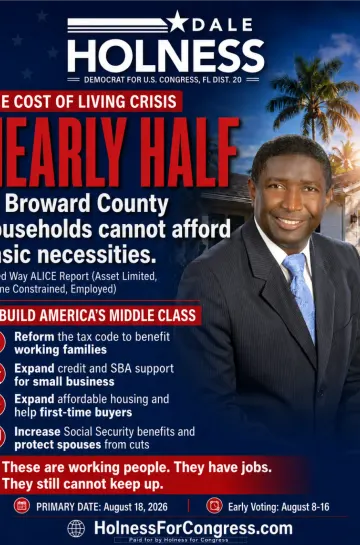
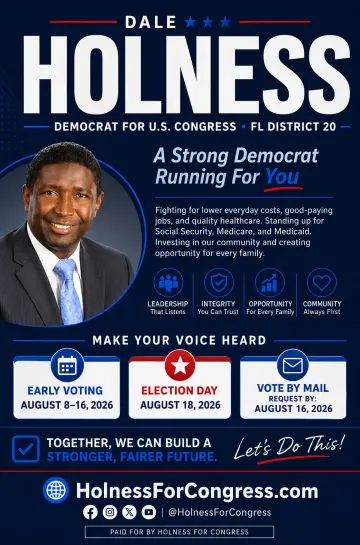
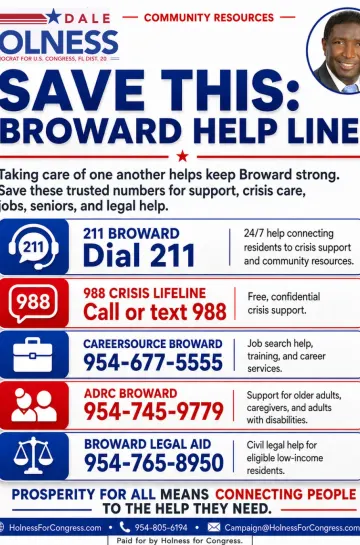
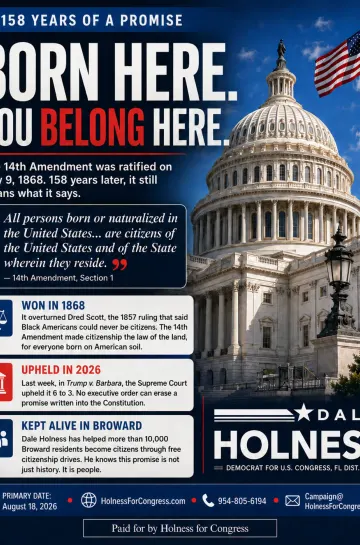
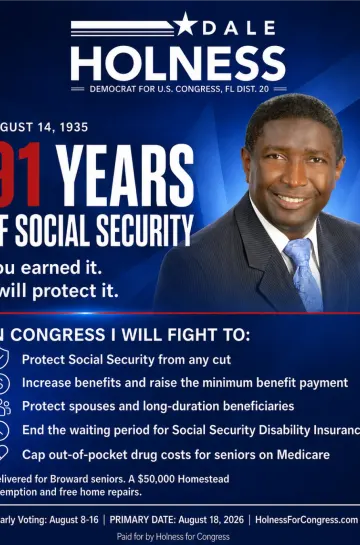
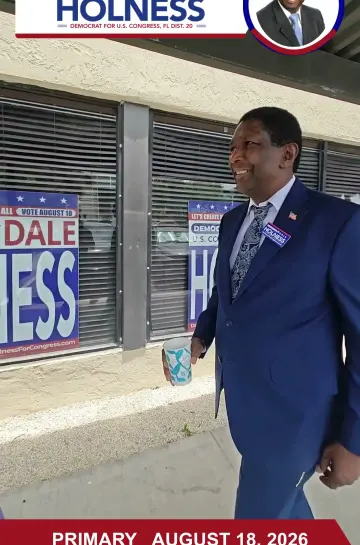
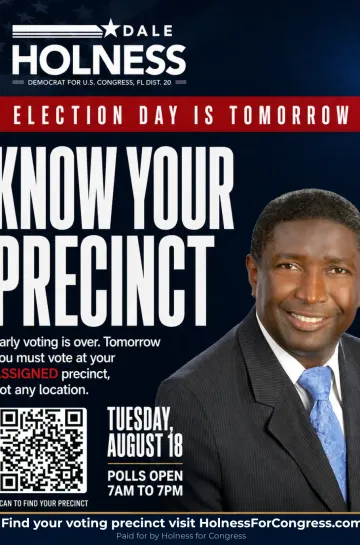
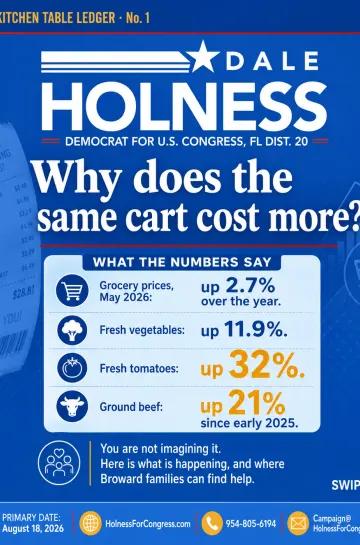
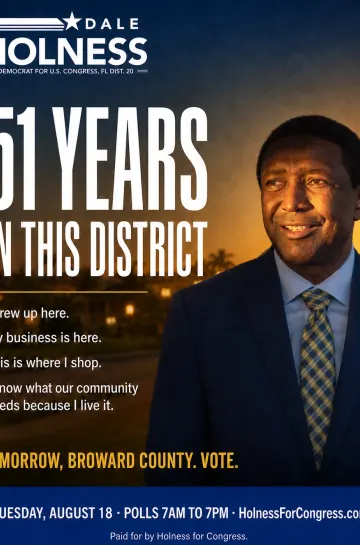
We managed Meta ads in English, Spanish and Haitian Creole for Dale Holness in the August 18, 2026 U.S. House primary for Florida’s District 20. He finished second. One lesson we took from it: reach and clicks are different jobs. Some ads were set to maximize reach and others to drive landing page views. A campaign needs both, and it needs to know which job each ad is doing. For how recognition gets built over a whole campaign, read our guide to name recognition in politics.
How do you run Meta ads in Spanish and Haitian Creole?
Treat each language as its own audience with its own ads, not as a translation tacked onto the English version.
Step 1. Make a separate ad for each language
One language per ad keeps the message clean and lets you see results by language. Our Dale Holness case study breaks down spend and clicks that way.
Step 2. Write it for the language, then have a native speaker review it
Whether a person or an AI tool drafts the translation, a native speaker should check it before launch. Give candidate names, office titles and dates an extra look. On the Dale Holness program, video ads, carousels and campaign songs shipped in English, Spanish and Haitian Creole.
Step 3. Put the disclaimer in the ad’s language
In Florida, section 106.143 lets the required disclaimer information appear in the language used in the ad. Federal candidates should confirm their approach with counsel.
Step 4. Match the audience to the language
Use the tools covered above: areas of the district where the language is widely spoken, supporter lists that record a language preference, and engagement audiences built from people who watched that language’s video.
Step 5. Compare results by language
Cost and response can differ from one language to the next. Read each language’s numbers on their own before you move budget.
Multilingual work is routine for us. For the Tamar Hamilton judicial campaign, we delivered the website and Meta ads, with ad creative in English, Spanish, Haitian Creole and Portuguese.
How Advocacy Aces helps with Facebook and Instagram ads
Advocacy Aces is a digital advertising and creative agency for law firms and political campaigns, working in English, Spanish and Haitian Creole. We run Facebook and Instagram ads for political campaigns as one team: targeting, copy, creative, media buying and reporting. That includes audiences built from location, demographics, lookalikes and supporter data within Meta’s political ad rules, retargeting, and a weekly creative refresh.
Our video team cuts vertical video ads for Reels and Stories, and our writers deliver political ad copy written for your race. You keep ownership of your ad accounts. Ad spend goes directly from you to Meta, separate from our fee. We walk you through the reporting, not just send a dashboard link, and we take one client per race.
If you are planning Facebook and Instagram ads for your campaign, Schedule Consultation and we will talk through your district, your timeline and the rules your ads need to follow.
This article is marketing guidance, not legal advice. Election, platform and bar rules change, so confirm the details with your campaign counsel, filing officer or bar before you rely on them.