Name recognition is how familiar your name feels to voters when they reach it on the ballot. In low-information local races, research finds a familiar name can raise support. Build it on purpose: one consistent name and look, repeated over months across digital ads, video, streaming TV, your website and earned media, in the languages your voters speak.
Key takeaways
- Name recognition matters most in low-information races, where voters have little else to go on. Many city, county, judicial and other down-ballot contests fit that description.
- The research is mixed. A familiar name raised support in several experiments, but simply exposing voters to a name often did little, and the effect fades against incumbency.
- A week of heavy Facebook ads did not raise candidates’ name recognition in two randomized experiments. Plan for steady exposure over months, across channels.
- Follow a plan: awareness, recognition, trust, momentum, then turnout on Election Day.
- Start before mail ballots go out, and stay visible through early voting.
What is name recognition in politics?
Name recognition, often called name ID, is whether voters know who you are when they see your name. Recognition is not fame. It is familiarity. In a low-information race, voters will not know everything about you. The goal is for your name to feel like a known choice when they reach it.
It helps to separate three ideas that often get lumped together:
| Term | What it means | Why it matters |
|---|---|---|
| Recognition | The voter has heard of you | Everything else in the campaign attaches to it |
| Favorability | The voter’s impression is positive, negative or neutral | A known name with a poor impression is not an asset |
| Association | The voter links your name to the office and a reason to choose you | This turns a familiar name into a vote |
Name recognition can be one reason the best candidate does not always win. Our guide to how voters decide in down-ballot races covers that side. This guide is about building recognition on purpose.
Why does name recognition matter in politics?
Because most races are not high-profile. Political scientists Cindy Kam and Elizabeth Zechmeister note that most electoral contests feature candidates who are relatively unknown, and their three lab experiments found name recognition can affect candidate support (American Journal of Political Science). A key reason appears to be viability: people see a more familiar candidate as more likely to win and rally around that candidate.
The authors stress that the effect holds only in low-information races, which they say make up most of the decisions on a ballot (authors’ summary, AJPS).
The practical consequence is straightforward. If most of a ballot is made up of races where voters have little else to go on, then a down-ballot campaign’s first job is to put its name in front of those voters, in enough places and over enough months that it is not new to them when they reach the ballot.
Where does name recognition run out?
In two places: against an incumbent, and where a campaign does nothing but repeat a name. Kam and Zechmeister found the effect dissipates when voters have a more relevant cue, incumbency (AJPS abstract). And a 2025 study that exposed people to challengers’ names in three sets of experiments across U.S. races found little support for the idea that simply seeing a name wins votes, even when party labels were added (Research & Politics).
What we take from this: familiarity opens the door, especially in down-ballot races. It does not close the sale. Voters need to connect your name to the office and to a reason to choose you, which is why a recognition plan has a message inside it.
Can a week of Facebook ads build name recognition?
The research that tested it says no. In two randomized field experiments during the 2012 elections, a state legislative candidate and a congressional candidate ran week-long Facebook campaigns aimed at randomly selected groups of voters in their districts, at the highest volume Facebook could deliver. Treated users typically saw the ads about 38 times (Political Behavior).
Those voters were no more likely to recognize the candidates’ names or view them favorably, though in one study they were 5.3 percentage points more likely to recall the ads (J-PAL). The authors caution that two experiments are not the last word, and that ads could work differently in other formats, such as video, or other contexts (Political Behavior).
The practical lessons:
- A week is not a plan. Heavy frequency in a short window did not move recognition.
- There is no magic number. We found no credible research behind any specific count of exposures.
- Channels work together. Digital ads on Facebook, Instagram, Google Search, YouTube and X, plus streaming TV and earned media, reach different slices of the district. Put the same name and look on several of them, and keep them running for months.
What is the plan to build name recognition?
Our plan runs in five stages: awareness, recognition, trust, momentum and Election Day. Each one makes the next easier.
Step 1: Awareness. Introduce your name.
Set one name and one look, and match the ballot. Confirm with your filing officer how your name will be listed, then use that exact form, one color palette, one logo and one photo style on every ad, video and web page. Digital graphics that carry one look across every platform make each later touchpoint easier to recognize.
In Florida, a candidate who is not the incumbent cannot use “re-elect” in political ads and must put “for” between the name and the office so incumbency is not implied (Fla. Stat. 106.143(6)). Build that into the logo on day one.
Step 2: Recognition. Be seen consistently.
Pick the channels that reach your district and schedule them to overlap. A digital ad can reach people across the district who use that platform. A streaming TV spot can reach people watching streaming apps and channels in the county, city or ZIP codes you target. Your website is where anyone who looks you up lands, and earned media reaches people who follow local news. None does the whole job alone, and the same name and look on each lets them reinforce one another.
Step 3: Trust. Earn confidence.
This is where a familiar name becomes a reason to vote. Lead with your background, your work in the community and why you want the office. Use endorsements with care: in Florida, it is unlawful to say a person or organization supports you without their specific approval in writing (Fla. Stat. 106.143(4)).
Judicial candidates lean on background even more. Florida bars them from campaigning as members of a political party (Fla. Stat. 105.071). That makes the seat a nonpartisan office under state law (Fla. Stat. 97.021), and ballots carry no party label for nonpartisan offices (Fla. Stat. 105.041). Many voters know little about judicial candidates. In an Ohio survey, the biggest reason voters gave for not voting for judges was not knowing enough about the candidates.
Canon 7 of Florida’s Code of Judicial Conduct also generally applies to judicial candidates and limits what they can say and do while campaigning (An Aid to Understanding Canon 7), so have counsel review campaign materials. For help turning your background into one clear line, see how to write a campaign message.
Step 4: Momentum. Build support.
Give voters who know your name something to do: sign up, volunteer, come to an event or share a post. A shared post puts your name in front of their friends and neighbors, and every sign-up tells you familiarity is turning into support.
Step 5: Election Day. Turn familiarity into turnout.
The aim is that when voters reach your race, your name does not feel like a risk. It feels like a known choice. That only counts if supporters vote, so the final stretch shifts to reminders: when mail ballots arrive, when early voting opens and where to vote.
What goes into the plan itself?
The working version fits on a single page: media plan, targeting, message, frequency and results. Answer each question in writing before money is spent.
| Plan item | Question to answer | Example decision |
|---|---|---|
| Media plan | Which channels, in what order, for how long? | Facebook and Instagram district-wide first, search and video alongside them, streaming TV added later |
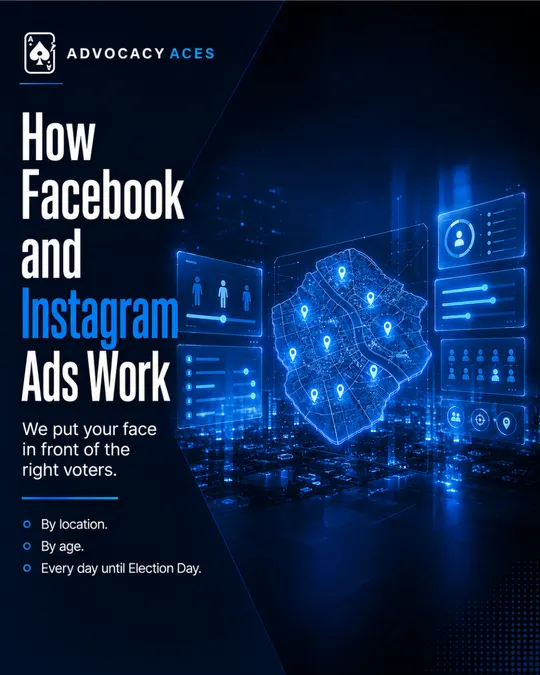
| Targeting | Who needs to know your name? | People in the district by location and age, plus your supporter lists |
| Message | What should voters connect to your name? | One reason to choose you, said the same way everywhere |
| Frequency | How often, over what stretch? | Steady exposure over months, not one heavy week |
| Results | How will you know it is working? | Reach, sign-ups, site visits, a poll if affordable |
How do digital ads help build name recognition?
Digital ads add reach and repetition across a district, at a scale your budget controls. Run steadily over months, they are a flexible way to keep a name in front of voters, and the reporting tells you how many people saw it and how often.
What you control is the audience, the platforms and the length of the run.
In practice:
- Reach voters where they are. In Pew Research Center’s 2025 survey, 71 percent of U.S. adults said they use Facebook and half said they use Instagram (Pew Research Center). That is a large share of a district, but not everyone, so plan for more than one platform.
- Target by place, not politics. Meta’s broad targeting covers location, age and gender, and Custom Audiences find your existing supporters on the platform. Meta has removed detailed targeting tied to political beliefs and social issues (Meta).
- Repeat over weeks and months. How often a person sees your ads depends on budget and audience size, so set frequency in the media plan instead of assuming it.
- Keep the creative consistent. Refresh ads so they stay interesting, but keep the name, colors and photo style identical. That goes for consistent video creative across platforms as much as for graphics.
- Add the big screen where it fits. Streaming TV spots for local races put the same name and look on a television, targeted by geography such as county, city or ZIP code.
- Follow the rules. Meta requires advertisers running ads about elections or politics to complete authorization and include a “paid for by” disclaimer. It blocks new political ads in the final week of the U.S. election campaign, though ads with at least one impression before that week may keep running (Meta). Our guide to Facebook and Instagram ads for political campaigns walks through setup.
Florida state and local candidates also need the disclaimer required by Fla. Stat. 106.143. For communications only about federal candidates and elections, the FEC says the authorization notice does not have to follow state or local disclaimer laws (FEC). This is general guidance, not legal advice, so confirm disclaimer wording with your campaign counsel or filing officer.
When should you start building name recognition?
Before ballots go out, and earlier than feels urgent. An analysis of 49 field experiments on campaign contact in general elections found that persuasion sometimes appeared when campaigns reached voters long before Election Day and measured it right away, but that this early persuasion decayed (American Political Science Review). That study measured persuasion, not recognition, but we plan with the same lesson in mind: start early, then stay visible all the way through.
In Florida, voting begins well before Election Day:
| Milestone | When it happens |
|---|---|
| Mail ballots go to domestic voters who requested them | Between the 40th and 33rd days before a primary or general election (Fla. Stat. 101.62) |
| Required early voting | 10th day to 3rd day before an election with state or federal races, plus optional days set by the Supervisor of Elections (Fla. Stat. 101.657) |
| Meta blocks new political ads | Final week of the 2026 U.S. midterm campaign (Meta) |
Count back from those dates. Your name, look, website and first ads should be in place months before mail ballots go out. Our Florida campaign advertising timeline maps the full calendar. For a city election, confirm dates with your Supervisor of Elections or city clerk.
How do you build name recognition in more than one language?
Keep the name and look identical, and make the words native. A voter who reads Spanish or Haitian Creole at home should see the same name, colors and photo as an English-speaking neighbor, with copy written for that voter, not a word-for-word translation.
- Translate the message, never the name. Have a fluent speaker check every line.
- Match the disclaimer to the language. Florida law lets a political ad in another language provide the required disclaimer information in that language (Fla. Stat. 106.143(9)).
- Track each language separately. Results can differ, so do not assume they perform alike.
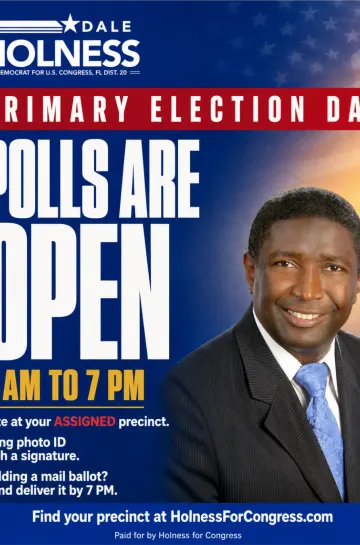
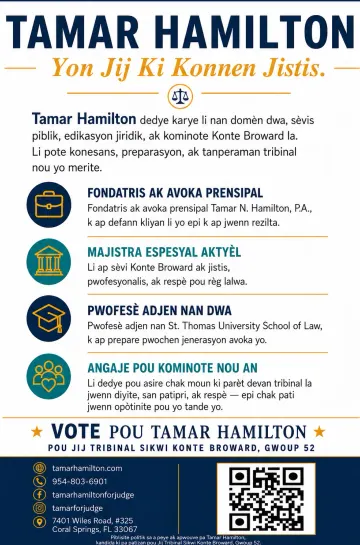
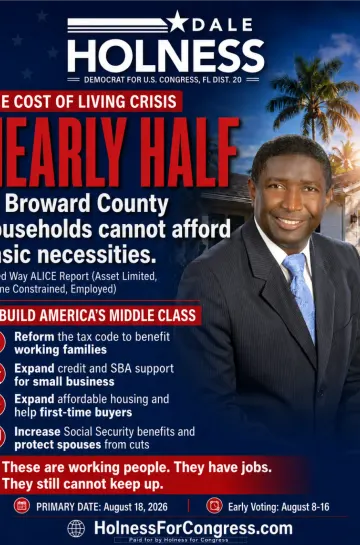
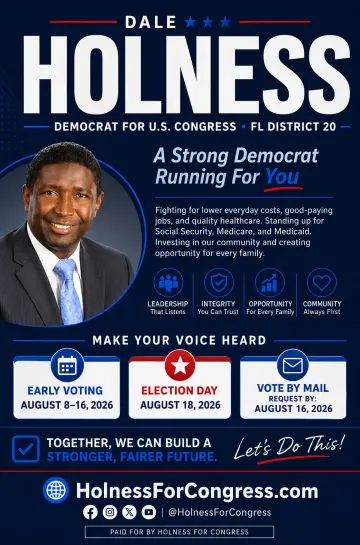
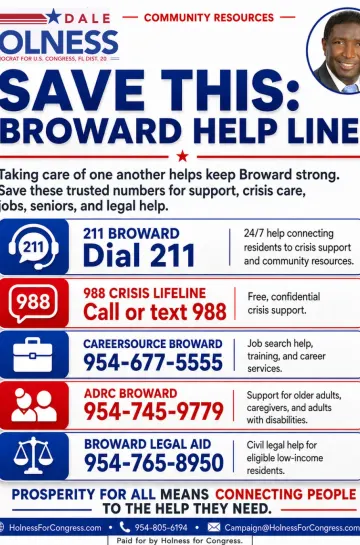
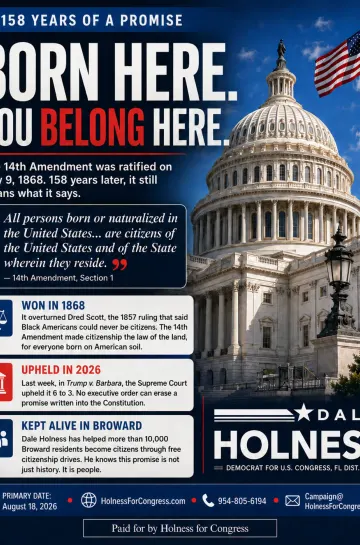
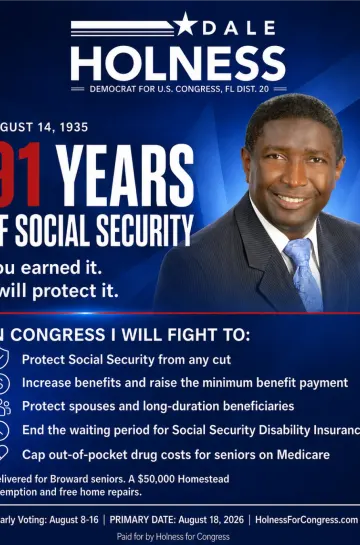
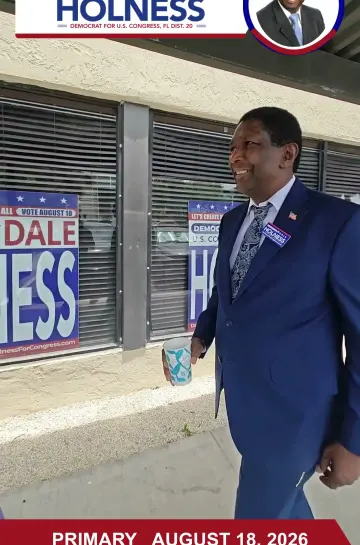
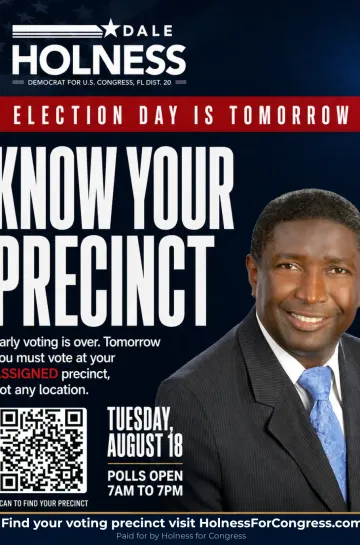
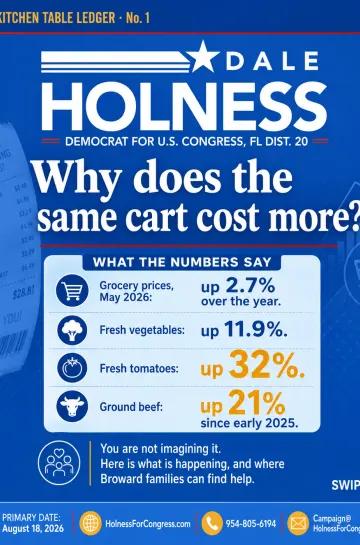
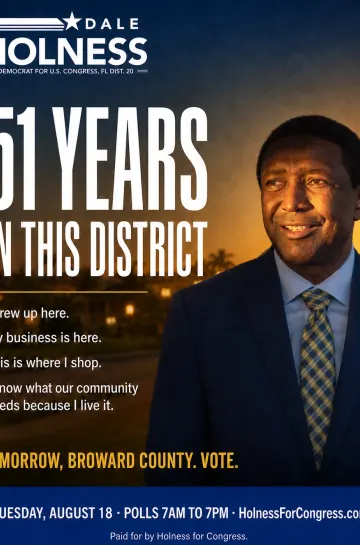
For Dale Holness’s 2026 primary campaign for Congress in Florida’s 20th District, we ran Meta ads in English, Spanish and Haitian Creole. He finished second. The case study on multilingual Meta ads and what we learned breaks the ads down by language: the Haitian Creole ads produced the cheapest link clicks, and the Spanish ads cost more per click than the English ones. Clicks measure interest, not recognition, but the lesson stands: language is not automatically a discount. For Tamar Hamilton’s Broward County judicial campaign, we delivered the website rebuild, Meta ads and print-ready files, with creative in English, Spanish, Haitian Creole and Portuguese.
How can you tell whether name recognition is growing without a poll?
Watch the signals you can already see: ad reach and frequency, website visits, sign-ups, and what people tell you at events and in your inbox. Only a survey of voters in your district measures name recognition directly, so read these as direction rather than proof. We attach no benchmarks, because every district, race and budget is different.
| Signal | Where to find it | What it suggests |
|---|---|---|
| Reach and frequency | Ad platform reports | How many people your ads reached, and how often |
| Website visits | Site analytics, by location where available | People are looking you up |
| Email, text and volunteer sign-ups | Your forms and lists | Familiarity is turning into action |
| Mentions at events and in messages | Your notes from events, plus comments and inbox replies | Voters say they have seen your name |
| Your ads side by side | Meta’s public Ad Library, which stores political ads for seven years (Meta) | Whether your creative looks consistent, and what other advertisers in your race are running |
If the budget allows, an early baseline poll and a later follow-up are the cleanest check.
How Advocacy Aces helps candidates build name recognition
Advocacy Aces is a digital advertising and creative agency for law firms and political campaigns, working in English, Spanish and Haitian Creole. One team handles targeting, copy, creative, media buying and reporting, and we walk you through the reports. You keep ownership of your ad accounts, and we take one client per race.
For a recognition plan, that means digital ads that keep your name in front of district voters on Facebook, Instagram, Google Search, YouTube and X, plus video, graphics and streaming TV spots that carry the same name and look. Marlon Bolton ran for Tamarac City Commission, District 1, in 2016, 2020 and 2024, and we worked all three campaigns; the case study on three elections in one Tamarac district lists the certified results.
If you want your name to feel familiar before ballots go out, we can build the plan with you. Schedule Consultation
This article is marketing guidance, not legal advice. Election, platform and bar rules change, so confirm the details with your campaign counsel, filing officer or bar before you rely on them.