A campaign message answers one question in its first line: why you, for this district, these voters, at this moment. A slogan only sounds good. Build the message from district research, say it in plain words and in your voters’ languages, and check it against Florida’s ad rules before it runs.
Key takeaways
- A message is a case, not a slogan: why you, this district, these voters and this moment.
- Generic lines could belong to any candidate. Put your reason in the first line.
- Build the message from past results, the words voters already use, public records and the ads already running in your race.
- Keep one core message and adapt it by audience, format and language, with native speakers reviewing translations.
- In Florida, the words themselves carry rules: disclaimer wording, party labels, “re-elect”, endorsement approval and, for judicial candidates, Canon 7.
What is the difference between a slogan and a campaign message?
A slogan is a line. A message is a case. It answers one question in four parts:
- Why you. What in your record, work or life makes you the right person for this seat.
- This district. The streets, schools, services or courts the office actually controls.
- These voters. The people who will decide the race, and what they deal with day to day.
- This moment. Why this election matters now.
Campaign trainers make the same distinction. The National Democratic Institute’s Campaign Skills Handbook defines a message as “a short, truthful statement that lays out for voters why they should vote for you, and provides a contrast between you and your opponent(s),” and says it is “not a catchy phrase or slogan.”
A slogan can move from one campaign to another without changing a word. A message cannot. The simplest test we know: put your opponent’s name in front of your line. If it still works, you have a slogan.
| Slogan | Campaign message | |
|---|---|---|
| What it does | Sounds good | Gives a voter a reason to choose you |
| Who it fits | Any candidate, any race | One candidate, one race |
| Where it lives | The last line | The first line of every ad, script and speech |
A slogan still works as a sign-off. It just cannot carry the campaign. For where the message fits in the full plan, read our guide to digital marketing for political campaigns.
Why do generic campaign lines get ignored?
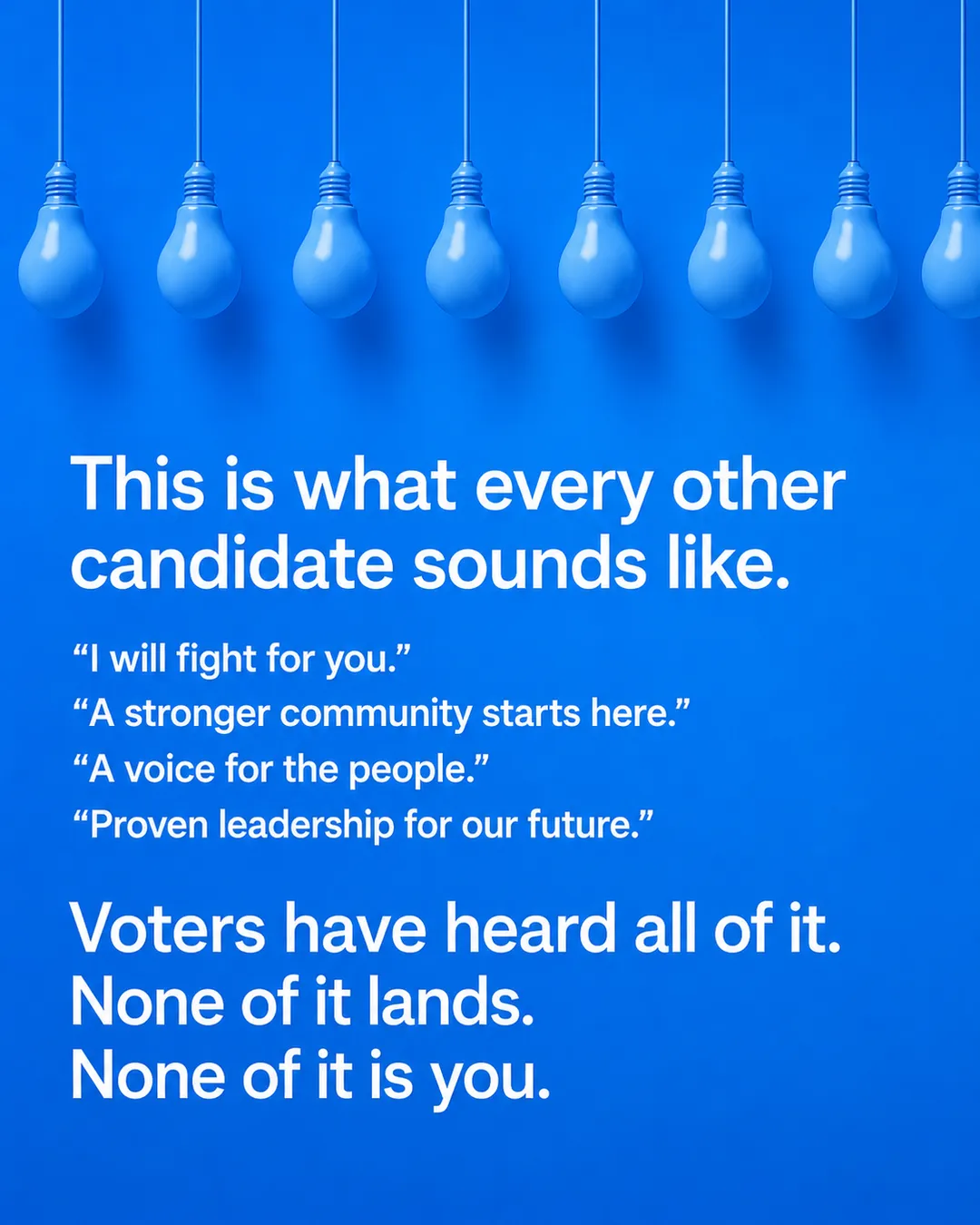
Generic lines get ignored because a voter cannot tell who is talking. Every season fills up with the same ones:
- “I will fight for you.”
- “A stronger community starts here.”
- “A voice for the people.”
- “Proven leadership for our future.”
None of these lines is wrong. That is the problem. In our experience, voters have heard all of it. A line that could belong to any candidate gives a voter nothing to connect to your name.
Time makes it harder. Meta’s 2016 research on attention in feed found people spent an average of 1.7 seconds with a piece of content on mobile, compared with 2.5 seconds on desktop, and cited Fors Marsh Group tests showing that 0.25 seconds of exposure was enough for people to recall mobile feed content at a statistically significant rate. The study is ten years old and measured Facebook’s feed, not voters, so treat it as a direction. Meta’s advice to advertisers still fits: bring the brand to the front, which for a campaign means your name, make video understandable without sound, and get the message across succinctly.
You do not lose them at the end of the ad. You lose them in the first line. Do not spend that line on a greeting or your biography. Spend it on your reason.
A quick first-line test
- Read only the first line of your ad or script out loud.
- Cover your name. Could a candidate in another city say the same line?
- Would a voter who stops reading there know what you want to do, and where? If step 2 is yes or step 3 is no, rewrite the first line.
How do you build a message from district research?
You build a campaign message in three steps: district research, then a four-box grid, then one sentence. A sharp message names the district. It names the issue. It names the reason this election matters to the people deciding it. None of that comes from guesswork.
Step 1: Gather what the district is telling you
- Past results. Study past votes and margins for the seat from your county Supervisor of Elections, as our Marlon Bolton case study does for three Tamarac City Commission races.
- The words voters already use. Candidate forums, community meetings, comments on your posts and the messages people send you. Write down what they say is wrong, in their words. Their phrasing usually beats yours.
- Public records. Agendas, minutes and budgets show what the office really decides. A promise about something the office does not control is hard to defend at a candidate forum.
- The ads already running. For ads about elections or politics, Meta’s Ad Library keeps them visible for seven years, active or inactive, with spend, reach and funding entity information. Read what your race already sounds like, so you do not sound like it.
Step 2: Fill in a four-box message grid
The National Democratic Institute’s Campaign Skills Handbook calls this a message box: what we say about us, what we say about them, what they say about us, and what they say about themselves.
| About you | About your opponent | |
|---|---|---|
| What you say | Your case for yourself | The fair, factual contrast you draw |
| What they say | The criticism you expect | Their case for themselves |
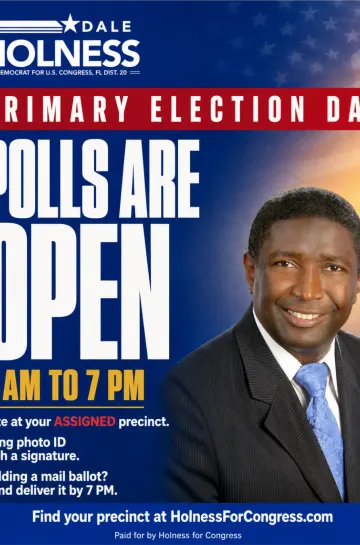
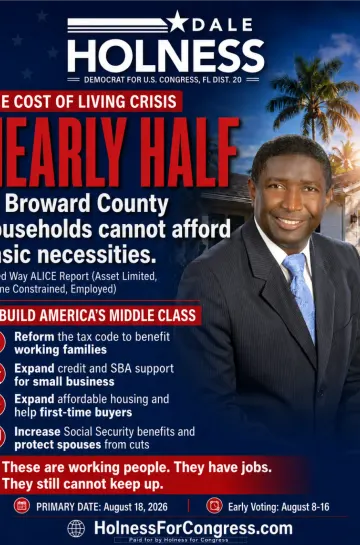
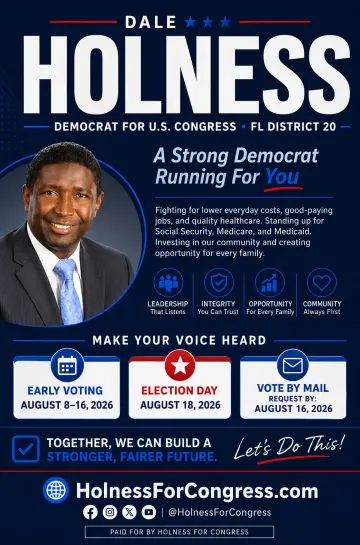
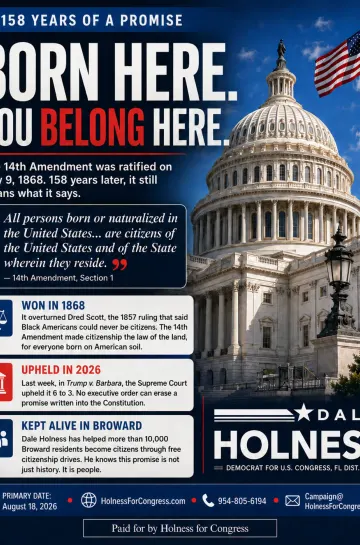
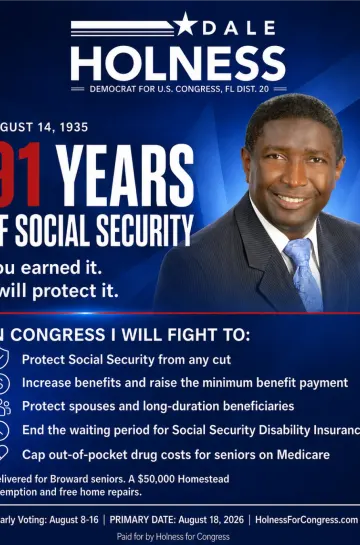
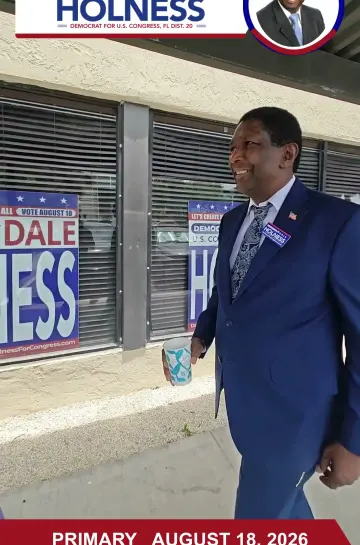
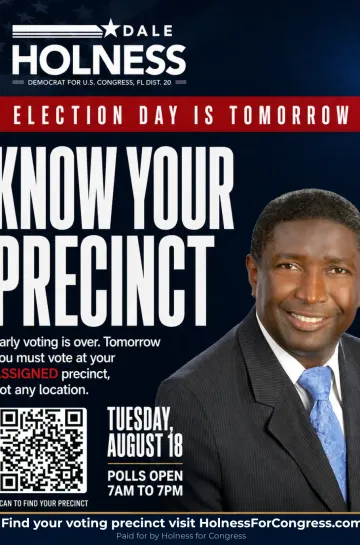
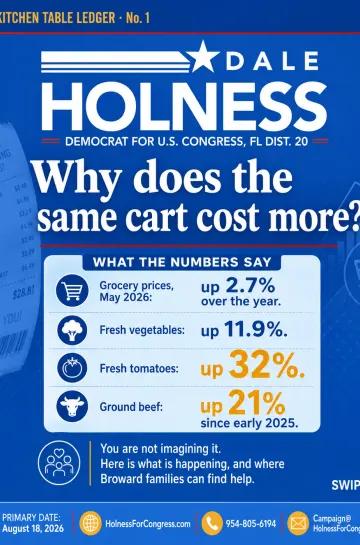
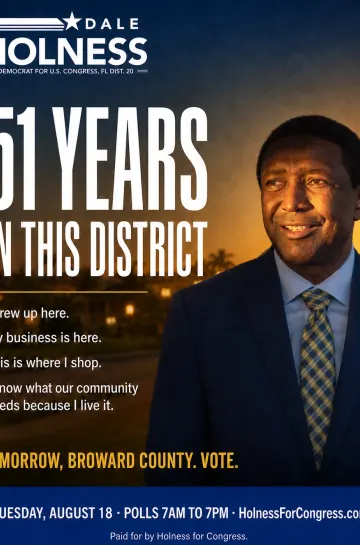
The message usually lives where your case is strong and the expected criticism is weak. After the Dale Holness congressional primary, where he finished second, one lesson we wrote down was that a message has to give people a choice: voters need to know what they are choosing between, not only who has the better resume. Keep every contrast accurate and relevant. Judicial candidates face stricter limits, covered below.
Step 3: Write one sentence
Put the answers into one plain sentence: who you are, what you will do, where, and why now. Read it to someone who does not follow local politics. If they cannot repeat it back, cut words until they can.
What should a strong message do for a voter?
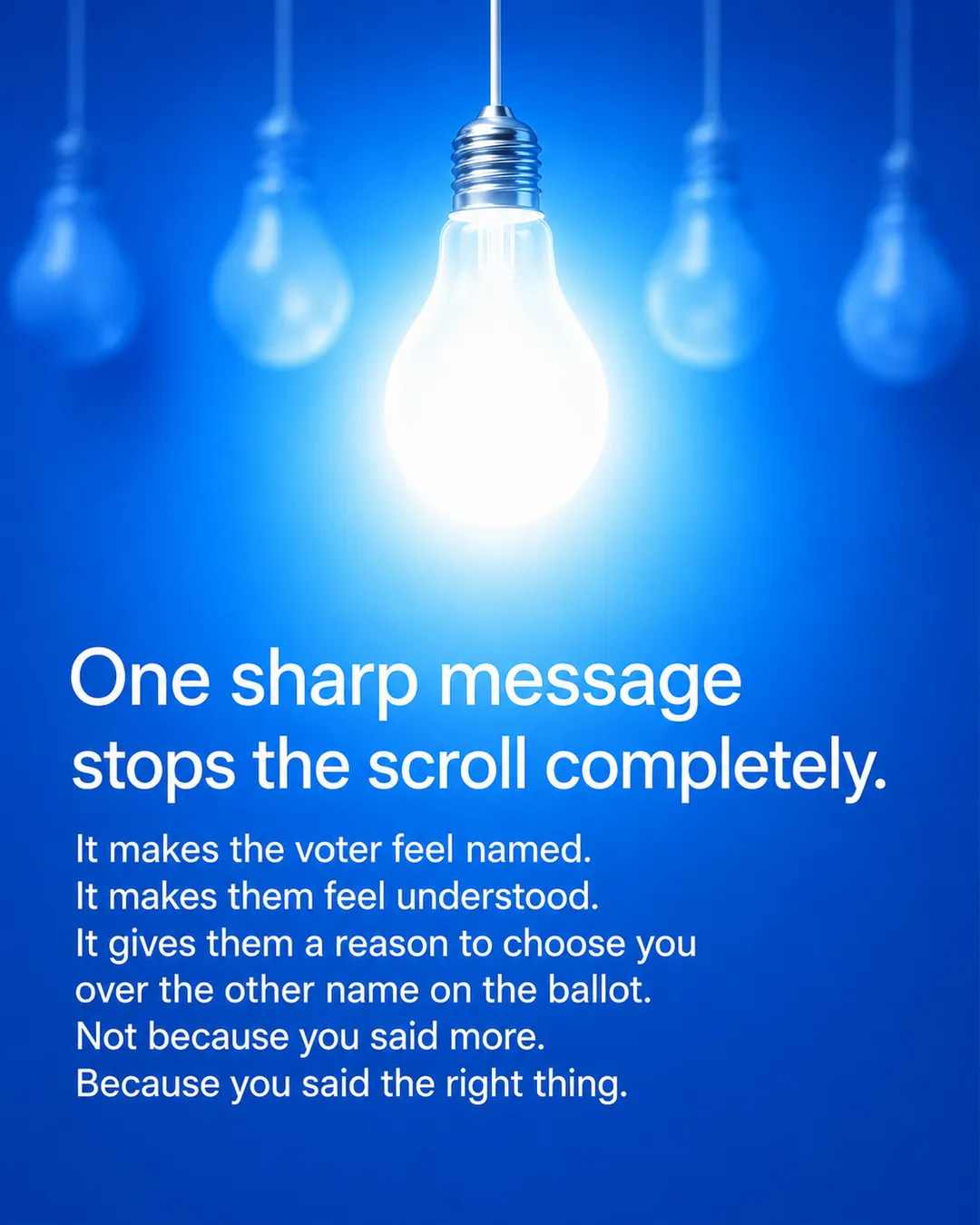
A strong message gives the right voter a reason to stop scrolling. It does three jobs:
- It makes the voter feel named. They see their neighborhood, their school or their commute in the first line.
- It makes them feel understood. It describes the problem the way they would, not in policy language.
- It gives them a reason to choose you over the other name on the ballot. A voter should be able to finish the sentence “I am voting for them because…”
When a message works, it is not because you said more. It is because you said the right thing.
A clear reason matters most when voters do not know you yet. Pair the message with a plan for building name recognition, and if your race sits far down the ballot, read how voters decide in down-ballot races.
How do you adapt one message for each audience and format?
Keep the core sentence. Change the job it does.
| Audience | What they need from the message | Example ask |
|---|---|---|
| Base supporters | A reason to talk about you | Volunteer, share, donate |
| Persuadable voters | Proof behind the reason | Watch the video, read the plan |
| Supporters who vote unreliably | A reminder that this race is worth the trip | Know when and how to vote |
We cover finding and reaching each group in voter targeting for base, persuadable and low-turnout voters. Then fit the same core to each format:
- Video scripts. Say the reason in the opening line and put it on screen as text, so the ad works with the sound off.
- Ad copy. The first line of the post text carries the message. The headline repeats it in fewer words.
- Text messages. One line of message, one clear action. Our email and SMS work covers reminder texts and sequences.
- Your landing page. The page a voter reaches after the click opens with the same sentence as the ad, so the ad and the page say one thing instead of two.
Once ads run, keep the message and change the hook, image and proof point, so the same people are not seeing one piece for weeks. Our digital advertising work includes a weekly creative refresh.
Should your message run in Spanish or Haitian Creole?
If many of your voters speak Spanish, Haitian Creole or another language at home, give them a version made for them. Florida’s disclaimer law already accounts for this. Section 106.143(9) of the Florida Statutes says an ad produced in a language other than English “may provide the information required by this section in the language used in the advertisement.”
Who sees each version matters as much as the translation. In a 2018 study by scholars at the University of Chicago and Yale University, summarized by The Journalist’s Resource, bilingual and English-only adults watched nearly identical Spanish and English ads from three candidates for national office. Bilingual participants were about 5 percentage points more likely to choose two of the candidates after their Spanish ads, while the third candidate’s Spanish ad did not seem to help. English-only participants generally reacted against the Spanish ads, and in one case were 18.7 percentage points less likely to pick the candidate. It was an experiment, not a live campaign, and the researchers said they could only speculate about why one candidate’s Spanish ad worked better than another’s, with authenticity as one possibility.
Our takeaway: deliver each language to the audience that speaks it, instead of running a translated ad to everyone.
How to run a message in more than one language
- Translate the message, not the words. Ask a native speaker how a neighbor would say your core sentence.
- Have a native speaker from the community review every piece. Machine or AI translation is a first draft, never the final.
- Build a separate version for each language, with its own voice, captions and on-screen text, aimed at the people who speak it.
- Decide the disclaimer language on purpose, as section 106.143(9) allows, and confirm the wording with counsel.
- Report by language, so you can see what each version costs and does.
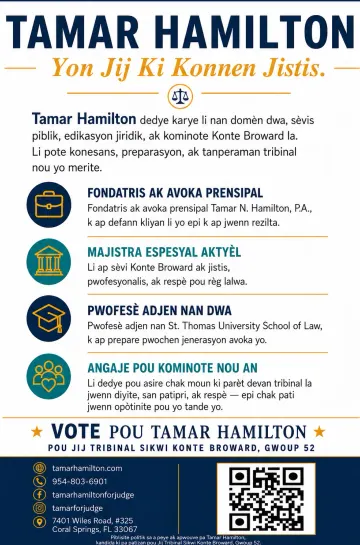
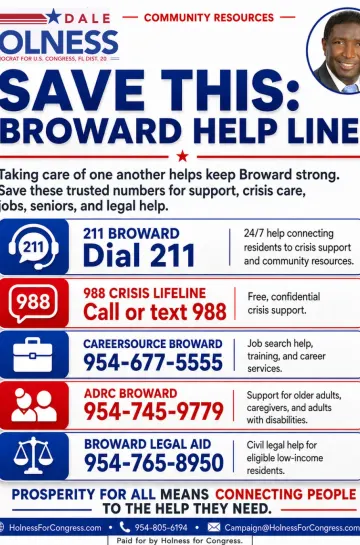
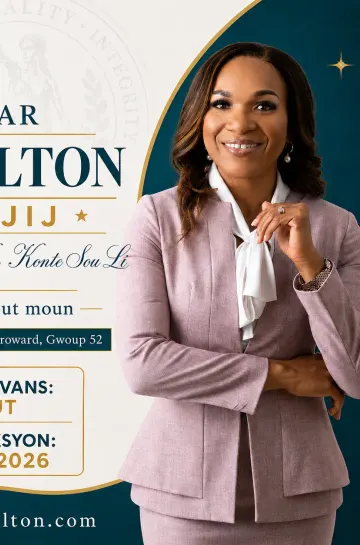
We ran Meta ads in English, Spanish and Haitian Creole for Dale Holness in the August 2026 Democratic primary for Florida’s 20th Congressional District, where he finished second. The case study breaks down results by language. We also delivered creative in four languages for a judicial campaign, Tamar Hamilton’s race for Broward County Circuit Court Judge, in English, Spanish, Haitian Creole and Portuguese.
Which Florida rules shape the words in your ad?
This section is marketing guidance, not legal advice. Confirm current requirements with your campaign counsel or filing officer before anything runs.
Florida’s disclaimer law, section 106.143, governs political ads in state and local races. Federal candidates follow the FEC’s disclaimer rules; the FEC says an authorization notice does not have to comply with state or local disclaimer laws when the communication is only about federal candidates and elections. On Facebook and Instagram, political advertisers must also complete Meta’s authorization and include a verified “Paid for by” disclaimer, or the ad is disapproved.
Section 106.143 in plain words
| Rule | What it means for your copy |
|---|---|
| Disclaimer, (1)(a) | An ad paid for by a candidate, other than a write-in candidate, must prominently state “Political advertisement paid for and approved by (name of candidate), (party affiliation), for (office sought)” or “Paid by (name of candidate), (party affiliation), for (office sought).” Leave room for it in every design and script. |
| Party labels, (3) | A partisan candidate’s ad names the party, or states no party affiliation. A nonpartisan candidate’s ad may not state a party, though it may state partisan-related experience. |
| “Re-elect” and “for”, (6) | A non-incumbent may not use “re-elect,” and must put “for” between name and office “in order that incumbency is not implied.” Write “(Name) for City Commission.” The subsection “does not apply to bumper stickers or items designed to be worn by a person.” |
| Endorsements, (4) | Claiming a person or organization supports you is unlawful without their “specific approval in writing.” News outlet editorial endorsements are an exception. |
| Other languages, (9) | The required information may appear in the language of the ad. |
| Unpaid profiles and social sites, (10)(e) | Messages placed on an unpaid public profile or account, or on a social networking website, are exempt when the source is “patently clear” from the content or format. Do not lean on this for paid ads. Meta requires its own “Paid for by” disclaimer, and counsel should confirm what Florida requires. |
Florida’s AI disclaimer rule
Section 106.145 requires the statement “Created in whole or in part with the use of generative artificial intelligence (AI).” when a political ad uses AI-generated content that appears to show a real person doing something that did not actually occur, created with intent to injure a candidate or to deceive regarding a ballot issue. For the person named as paying for, sponsoring or approving the ad, leaving it off where required is a first-degree misdemeanor, on top of any civil penalties. If AI imagery of a real person is on the table, talk to counsel first.
Judicial candidates and Canon 7
Judicial offices in Florida are nonpartisan. Section 105.011 bars campaigning for them based on party affiliation, and section 105.071 bars a judicial candidate from advertising as a member of any political party or endorsing any candidate.
The Code of Judicial Conduct goes further. As quoted in the Judicial Ethics Advisory Committee’s An Aid to Understanding Canon 7, Canon 7A(3)(e) says a judicial candidate shall not:
- make “pledges, promises, or commitments that are inconsistent with the impartial performance of the adjudicative duties of the office” about parties, cases, controversies or issues likely to come before the court, or
- “knowingly misrepresent the identity, qualifications, present position or other fact concerning the candidate or an opponent.”
The aid adds that a candidate should emphasize the duty to uphold the law regardless of personal views, and that promises about improvements in court administration are not barred. It cites an opinion that a candidate could not use “Elect Prosecutor (name of candidate) for Circuit Judge” on campaign literature, and a 2006 Florida Supreme Court case that removed a judge from office over misleading campaign literature, including statements suggesting he was an incumbent judge. The committee has declined to approve or disapprove the specific wording of campaign commercial scripts, and the aid was last updated in October 2021, so check the current Code with counsel before any judicial ad runs.
How do you turn a slogan into a message?
Here are three rewrites. They are invented for illustration, not real races or clients. Replace the details with facts from your own research.
City commission
- Slogan: “A voice for the people.”
- Message: “Families on the east side of District 2 watch the same streets flood every rainy season. I am running for City Commission to get the drainage repairs funded and finished.”
- Why it works: It names the district, a problem the commission can act on and a reason to act now.
School board
- Slogan: “Proven leadership for our future.”
- Message: “Parents keep telling me the same thing: they cannot get a clear answer on how their child’s school spends its money. I am running for School Board to walk families through the budget in plain language, at public meetings in every part of the district.”
- Why it works: It uses parents’ own words, names something the board oversees and contains no party language, so it fits a nonpartisan race.
Circuit judge
- Slogan: “A stronger community starts here.”
- Message: “[Number] years handling cases in [County] courtrooms. If elected Circuit Judge, I will treat every person who comes before the court with the same respect, follow the law regardless of my personal views and work to keep hearings on schedule.”
- Why it stays within Canon 7: It rests on accurate qualifications, commits only to fairness and upholding the law, and its one concrete goal concerns court administration. It makes no commitment on cases or issues, names no party and does not suggest the candidate already holds the seat. Have counsel review the final wording.
How can Advocacy Aces help with your message?
Advocacy Aces is a digital advertising and creative agency for law firms and political campaigns, working in English, Spanish and Haitian Creole. Our campaign copywriting from ad copy to video scripts is drafted with AI and edited by a writer, in your voice. We produce campaign video ads with Spanish and Haitian Creole versions, and we run the ads, from targeting to the reporting we walk you through. We also build messaging frameworks for teams that run their own ads.
We take one client per race, and you keep ownership of your ad accounts. To build a message for your district and your voters, Schedule Consultation.
This article is marketing guidance, not legal advice. Election, platform and bar rules change, so confirm the details with your campaign counsel, filing officer or bar before you rely on them.