Political ads work at the job a campaign needs done: putting your name, your face and one clear message in front of the voters in your district, week after week, in the languages they speak, with a record of everything that ran. That job is won over a season rather than in one heavy week, which is why the plan below is built in weeks and months.
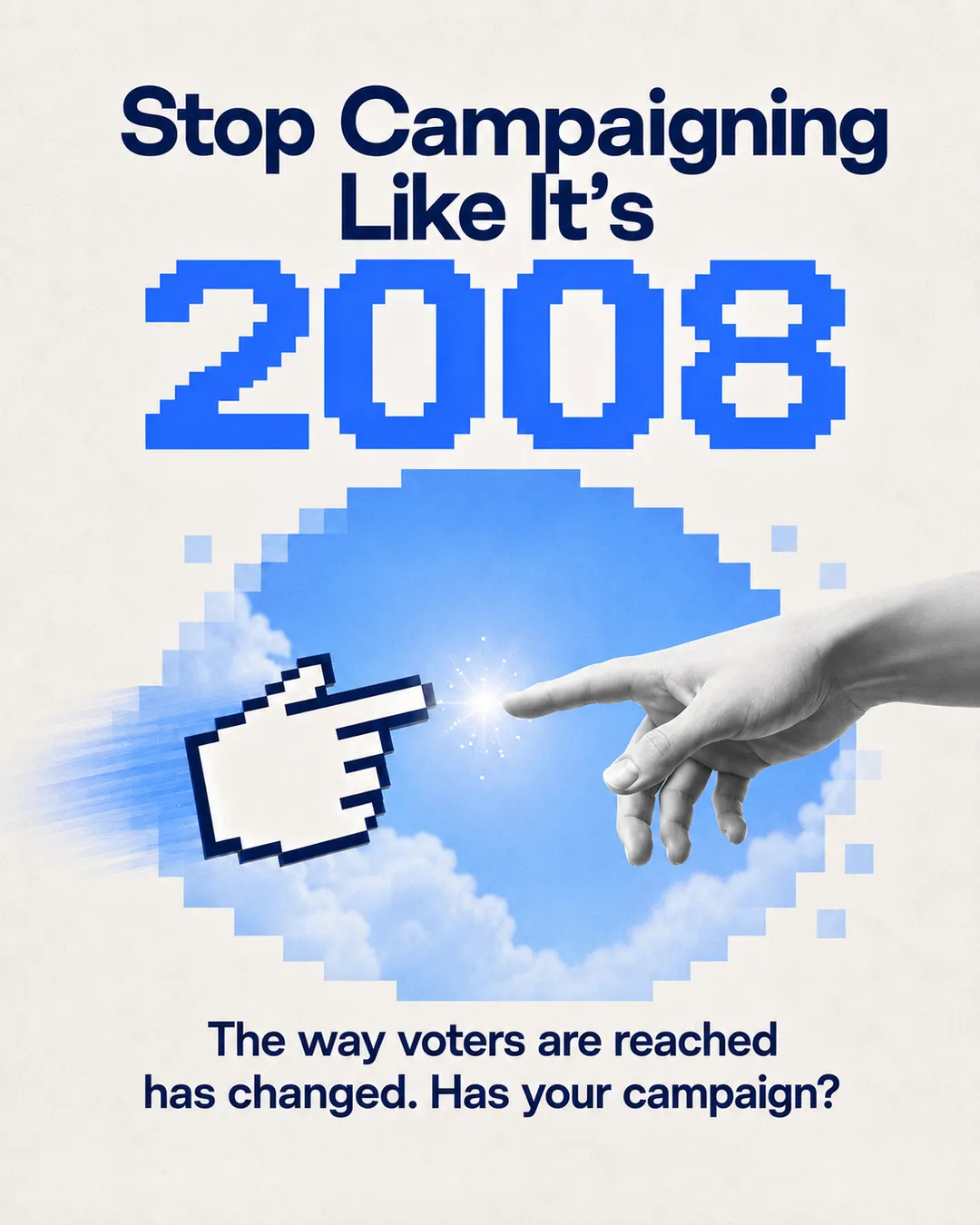
That job now happens on a phone. Nine in ten U.S. adults own a smartphone and 71 percent use Facebook, so a campaign planned around the media of 2008 is aiming at attention that has since moved into a pocket.
Key takeaways
- Voter attention sits on a screen people carry. Pew Research Center found 91 percent of U.S. adults own a smartphone, 71 percent use Facebook and half use Instagram.
- Digital ads buy reach and repetition inside an area you define, on a schedule you control, in more than one language.
- Reach and frequency trade against each other. Your budget, the size of your audience and the calendar decide how often each person sees you.
- A week is not a program, so plan in weeks and months. A week of heavy Facebook ads did not raise name recognition in two randomized experiments. A separate four-week program of election-coverage and turnout ads in Dallas was estimated to raise turnout in competitive races by 0.91 percentage points.
- Reporting tells you what ran, how many people it reached and what it cost. It does not tell you which voter decided because of it.
Where do voters meet a candidate now?
In a feed, on a phone, usually while doing something else.
Pew Research Center’s 2025 survey of 5,022 U.S. adults, fielded February 5 to June 18, found that 91 percent own a smartphone, up from 35 percent in the Center’s first smartphone survey in 2011. The same survey found that 71 percent say they ever use Facebook, half use Instagram and 84 percent use YouTube.
Those platforms are also where a lot of people learn what is happening in their city. In a separate Pew survey fielded August 18 to 24, 2025, 53 percent of U.S. adults said they at least sometimes get news from social media, 38 percent said they regularly get news on Facebook and 20 percent said the same about Instagram. For a city commission, school board or judicial candidate, that is the room where voters form their first impression of a name on the ballot.
Video is part of that room. The video that reaches people in a feed is short, vertical and watched with the sound on or off. For a candidate, that is a chance to be a face and a voice rather than a name in a list, which matters most in the races where voters know the office better than the people running for it. We script, edit and subtitle vertical video ads built for feeds and Stories from footage a campaign already has.
The shift did not arrive overnight. Pew found that 55 percent of American adults were online political users during the 2008 cycle, the first time it had recorded more than half the voting-age population using the internet to connect to the political process. What changed since is where the internet lives: not on a desk at home in the evening, but in a hand, all day.
That is the practical difference for a campaign. A plan built for 2008 assumes a voter who goes looking for you. The voter you need now is already scrolling, and your name is either in that feed or it is not.
National figures are not a count of your district, so treat them as the direction of travel and then check your own voter file and your own turnout history. Our guide to how voters decide in down-ballot races covers what that looks like on a long ballot, and our Florida guide to digital marketing for political campaigns puts the channels in one plan.
What do reach and repetition buy in a district?
They buy deliveries: a set number of people in your district, seen a set number of times. Reach is how many different people the ad was delivered to. Frequency is how many times it reached each of them. Multiply the two and you get impressions, and impressions are what an ad budget buys, priced per thousand.
Three things decide what a budget produces.
- The size of the audience. The same money aimed at a small district audience delivers high frequency, and aimed at a whole county it spreads thin. Draw the audience your plan actually needs.
- The calendar. In our own media buying, rates climb as Election Day approaches, because every campaign, committee and cause is bidding for the same feed at the same time.
- Time in market. Platforms need time to learn an audience before delivery settles. In our own programs, budget decided in week one goes further than budget found in week eight.
| What you are buying | What it means | What moves it |
|---|---|---|
| Reach | How many different people saw the ad | Budget, audience size, how long the ad runs |
| Frequency | How many times the average person saw it | Budget against audience size |
| Impressions | Total deliveries, reach multiplied by frequency | Budget and the cost per thousand |
| Cost per thousand impressions | What a thousand deliveries cost in that audience | Competition, season, placement, creative |
| Cost per click | What one visit to your site cost | Creative, audience, offer, landing page |
Frequency is also what a season of steady delivery adds up to. In a race where voters may not know the office well, being seen once is a coincidence and being seen through a whole season is a presence. That is an argument for a steady schedule rather than one heavy week, and our guide to name recognition in politics sets out how familiarity is built and where it counts most.
A week is not a program
Repetition needs a calendar behind it, not a single heavy week. In two randomized field experiments, a state legislative candidate and a congressional candidate showed Facebook ads to randomly selected voters in their own constituencies, and voters in the treatment group typically saw the ads about three dozen times over a week-long ad campaign. Exposure did not increase recognition of the candidates’ names or positive assessments of them, though in the second study treated voters were 5.3 percentage points more likely to recall seeing the ads. The authors caution that two experiments are not the last word, and that ads could work differently in other formats, such as video, or other contexts (Political Behavior).
A different experiment measured turnout instead of name recognition. Ahead of Dallas’s 2017 municipal elections, researchers ran banner and video ads for four weeks at 74,102 registered voters aged 23 to 35 who had voted in 2014 or 2016. Those ads promoted a newspaper’s election coverage or encouraged people to vote rather than a candidate, and they ran across the web rather than on social platforms. In competitive races, the researchers estimated that exposure to both kinds of ads raised turnout by 0.91 percentage points. In uncompetitive races, there was no significant effect.
Two things a campaign can act on. Plan advertising in weeks and months rather than as a burst at the end. And put the weight where the race is genuinely contested. Our Florida campaign advertising timeline counts those weeks back from your election date.
Who can you reach, and in which languages?
You choose the area, the ages and the people who already know you. You cannot choose people by their politics. Language is a targeting decision too.
Starting January 19, 2022, Meta removed detailed targeting options tied to sensitive topics, including “political beliefs, social issues, causes, organizations, and political figures.” What remains is broad targeting, which Meta says “includes gender, age and location,” Custom Audiences, which “let you find your existing audiences among people who are on Facebook,” and lookalike audiences built from one of those Custom Audiences.
For a local race, geography is the first decision and the hardest one. A city commission seat or a school board district may not exist as a named option, so the audience gets built from the cities and ZIP codes that cover it, or from a list of supporters you already have. Location settings reach an area rather than a district line, and Meta says you might see some ad impressions from outside your location settings, so we build the audience to cover the district and plan for a little spillover at the edges. Our guide to Facebook and Instagram ads for political campaigns walks through the setup, the authorization step and the disclaimer wording.
The audience you already have
The strongest audience on any platform is the one you built yourself. A Custom Audience made from the emails and phone numbers supporters gave you reaches the people most likely to volunteer, donate and show up, and a lookalike audience built from it finds new people who resemble them. Matching is partial, because only the people on your list who use the platform can be found there, so treat the match as a head start and not as a full list.
This is why every ad should have somewhere to send people. An ad that collects a sign-up today builds the audience you advertise to next month, and the list you own is the one no platform change can take away.
Language is targeting
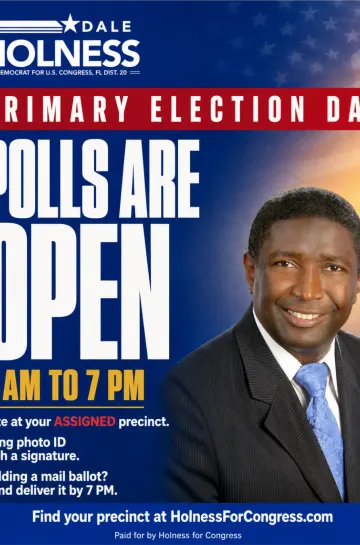
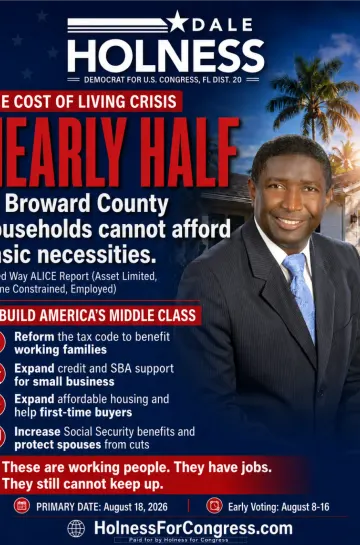
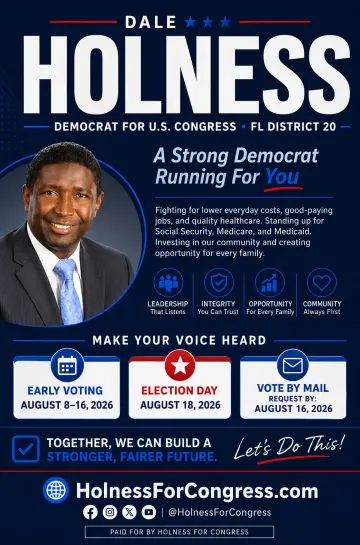
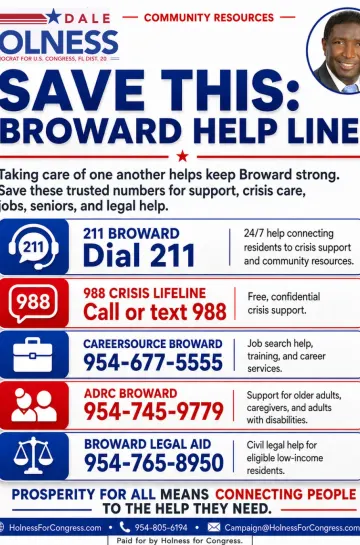
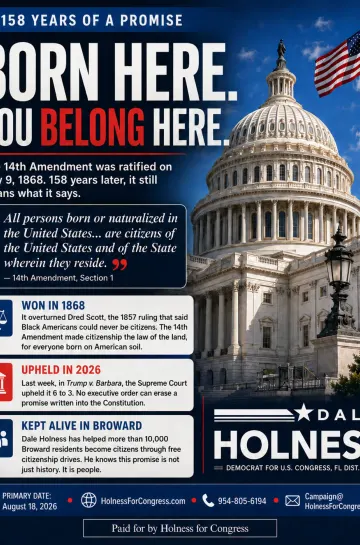
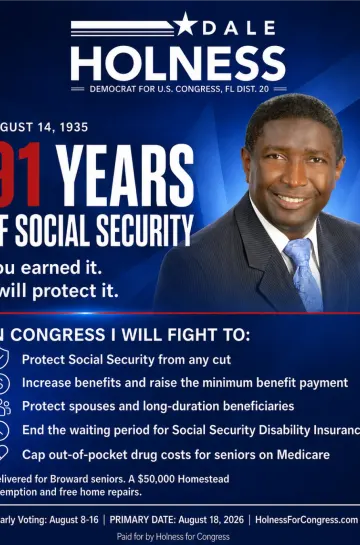
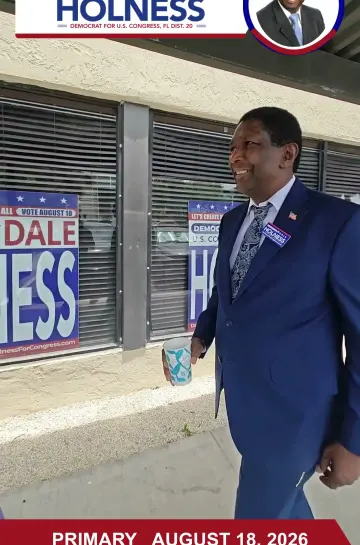
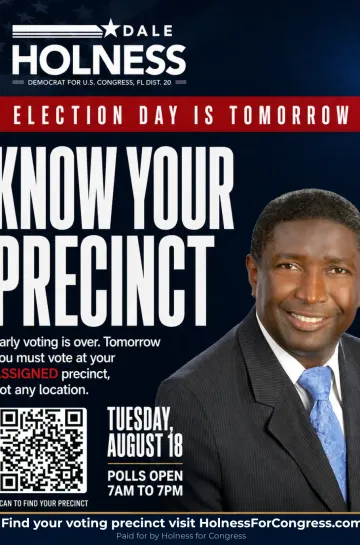
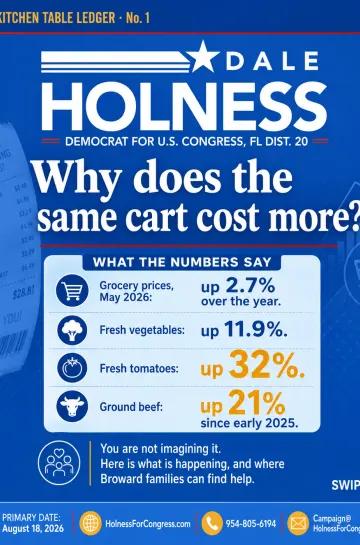
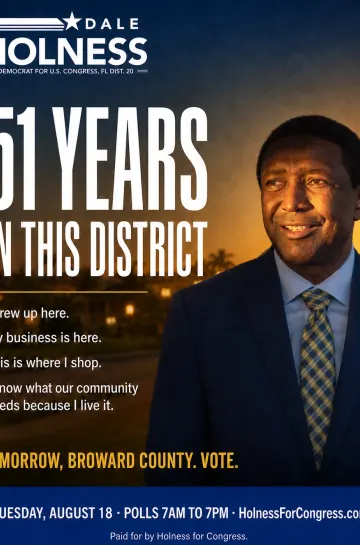
Treat each language as its own audience with its own ads, not as a translation attached to the English version. We ran Meta ads in English, Spanish and Haitian Creole for Dale Holness in the August 2026 U.S. House primary for Florida’s 20th District. He finished second. In that case study, the Haitian Creole ads were the smallest share of the spend and produced the cheapest link clicks of the campaign, while the Spanish ads cost more per click than the English ones. Language alone is not a discount, and you only see the difference when the reporting splits results by language and by the job each ad was given.
Florida law makes multilingual advertising practical. Section 106.143(9) says a political advertisement “published, displayed, or produced in a language other than English may provide the information required by this section in the language used in the advertisement.” A Spanish ad can carry its disclaimer in Spanish. This is marketing guidance, not legal advice, so confirm the details with your filing officer or campaign counsel.
We design ad creative and campaign graphics sized for every platform in English, Spanish and Haitian Creole, with more languages when a district needs them, and we keep the same name treatment, photo style and colors across all of them so every exposure reinforces the last.
What can you measure, and what can you not?
You can measure everything the platform delivered. You cannot measure why a voter decided.
| The report tells you | The report does not tell you |
|---|---|
| Reach and frequency, ad by ad | Whether the people reached turned out |
| Impressions, link clicks and total spend | Which message changed someone’s mind |
| Cost per thousand impressions and cost per click | Why a voter chose you over the other name |
| Results split by audience, language and creative | What a voter told a friend about you |
An impression is a delivery, not a confirmed view. A click is interest, not a vote. Read each number for what it is, then judge each ad against the job you gave it. Some ads exist to be seen by as many district voters as possible and are read on reach and frequency. Others exist to drive a visit to your site and are read on clicks and cost per click. On the Holness program we ran both kinds and read each against the objective it was given.
Three questions to ask of the report each week
- Is this ad still finding new people? When reach stops growing and frequency keeps climbing, the same voters are seeing the same ad. Widen the audience or change the creative.
- Is the creative earning attention? Compare this week’s cost per click and video views against last week’s for the same audience. A number that drifts the wrong way for two weeks is a creative problem, not a budget problem.
- Is one audience carrying the whole program? Split results by language, by age and by creative. Averages hide the ad that is working and the one that is quietly spending.
Two public rules also make your race visible before you spend. Meta requires advertisers running ads about social issues, elections or politics in designated countries, the United States among them, to complete its authorization process and include a verified “Paid for by” disclaimer, and it keeps those ads in a publicly available Ad Library for seven years. That means you can look up your own race and see which candidates are advertising, what their creative says and how long it has been running.
What does a week of a digital program look like?
The work is a routine, not a launch. A typical week on a campaign we run looks like this.
- Monday: review last week’s numbers by audience, language and creative, then move budget toward the ads doing the job they were given.
- Tuesday: new creative goes into rotation. One message, several cuts, so the audience sees a fresh execution of the same idea instead of the same image for a month.
- Wednesday: the version that is working gets built in every language the district speaks, with the disclaimer in that language.
- Thursday: people who watched a video or visited the site get the follow-up ad, and new sign-ups land on the list.
- Friday: supporters who gave you an email address or a phone number get the email or text that matches this week’s message, timed to the next event or voting date.
- All week: ads keep delivering while you are at a forum, at work or asleep, inside the budget and schedule you set.
Two deadlines belong in that routine. Ballots go out before Election Day, so the message has to be repeating well before the first one arrives. And Meta says it will block new political, electoral and social issue ads during the final week of the US election campaign. Ads that recorded at least one impression before that restriction period can keep running, so every ad you will need at the end has to be delivering before the window opens.
Where does streaming TV fit?
In the same plan as the feed, on the biggest screen in the house. Nielsen’s July 2026 Gauge report, released September 10, 2026, put streaming at 49.0 percent of total TV usage.
That matters for a local race because streaming is bought by geography. We cut 15 and 30 second spots from the photos and footage you already have and run them across more than 500 streaming apps and channels, targeted by city, ZIP code, county or congressional district, with reporting on impressions, households reached and completed views alongside your Meta and Google numbers. The spot plays full screen with the sound on, and the same face and message from the feed shows up on the living room screen.
How Advocacy Aces helps
Advocacy Aces is a digital advertising and creative agency for law firms and political campaigns, working in English, Spanish and Haitian Creole. One team owns the whole channel: strategy, targeting, copy, creative, media buying and reporting. You keep ownership of your ad accounts, ad spend goes directly from you to the platforms, and we walk you through the reporting instead of sending a dashboard link. We take one client per race, so we never work for your opponent.
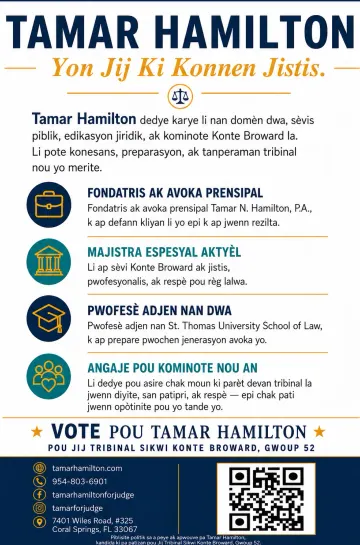
Our case studies show the record as it is. Marlon Bolton ran for Tamarac City Commission, District 1, in 2016, 2020 and 2024, and we worked all three campaigns. The case study on three elections in one Tamarac district lists the certified results from the Broward County Supervisor of Elections. In his words: “Their team helped us connect with the community in a way that really made a difference. The strategy was sharp, and their support helped us win our election by a landslide.” For Tamar Hamilton’s Broward County judicial campaign, we rebuilt the campaign website and designed the Meta ad creative, and the work ran in four languages. For Dale Holness we ran Meta ads in three languages in a U.S. House primary where he finished second, and that case study covers what we learned.
If the voters in your district are on their phones and your campaign is not there yet, Schedule Consultation and we will map the weeks, the audiences and the languages with you.
This article is marketing guidance, not legal advice. Election, platform and bar rules change, so confirm the details with your campaign counsel, filing officer or bar before you rely on them.