Immigration law firm marketing in Florida comes down to four things: a page and a message for each type of matter, advertising in the languages clients speak at home, a fast and consistent response to every inquiry, and ads that follow the Rules Regulating The Florida Bar. The Bar’s advertising rules apply to websites, social media and paid search, not just to television and mail.
Last reviewed October 23, 2026, against the Florida Bar rules dated June 30, 2026 and the Bar’s advertising filing page. This is marketing guidance, not legal advice. Your firm is responsible for every ad’s compliance, so have the responsible lawyer review each one.
Key takeaways
- The Bar’s rules apply to every medium. That includes your website, social posts, paid search and video.
- No predictions or guaranties. An ad cannot promise or imply a specific immigration result.
- Required statements must be in each language you advertise in. Spanish and Haitian Creole ads carry the same required content as English ones.
- Build by matter type. A family petition, an asylum case and an employment visa are different searches by different people.
- Choose channels by intent. Search and Local Services Ads reach people already looking. Social and video build trust before they are ready to call.
- Plan the response, not just the ad. An inquiry that waits has little value.
What does immigration law firm marketing include?
Five working parts, each of which a person can see:
- A website with a page for each matter type you handle, in the languages your clients read.
- A verified Google Business Profile, which Google also requires for Local Services Ads.
- Paid search and Local Services Ads, for people who are searching now.
- Social and video content that explains a process in plain language, which our guide to law firm social media strategy covers.
- An intake process that answers calls, texts and forms, in the client’s language.
Advertising that fills the top of that list without the intake step wastes the spend. Every part below is built around that order.
Which Florida Bar rules shape immigration marketing?
Subchapter 4-7 of the Rules Regulating The Florida Bar governs a lawyer’s advertising. The rules below come up most often in immigration marketing. This is a summary, so read the rule before you rely on it.
| Rule | What it says |
|---|---|
| 4-7.12(a) | Every ad must include the name of at least one lawyer or the firm responsible for it, and the city, town or county of a bona fide office of the lawyer who will perform the services |
| 4-7.12(c) | Words or statements the rules require must appear in the same language as the ad, and in each language used if more than one |
| 4-7.12(d) | Required information must be clear and conspicuous, and legible or intelligible |
| 4-7.13(b)(1) | An ad may not contain statements a prospective client can reasonably interpret as a prediction or guaranty of success or specific results |
| 4-7.13(b)(2) and (3) | Past results and characterizations of skill, experience or reputation must be objectively verifiable |
| 4-7.13(b)(9) | A testimonial may not be written by the lawyer, paid for with something of value, or fail to say the prospective client may not obtain the same or similar results, among other limits |
| 4-7.13(b)(12) | Paid, sponsored and promoted internet search results are subject to the rules, and may not imply an affiliation with another lawyer or firm. The Bar’s handbook says a triggered result is not misleading if the first text shown is the advertising lawyer’s or firm’s name |
| 4-7.18 | Direct contact with prospective clients, including email, text and targeted social media, has its own requirements |
| 4-7.19 and 4-7.20 | Most advertising other than websites must be filed with the Bar 20 days before first use, unless it is limited to presumptively valid content. Websites are exempt from filing |
The Bar also publishes its advertising filing requirements, and an ad in another language must be filed with an accurate English translation. For how these rules apply to social posts, see our law firm social media guide.
One rule applies specifically to immigration. The comment to Rule 4-7.11 says a lawyer admitted in another jurisdiction who has established a regular presence in Florida to practice only a federal practice area, such as immigration, must comply with Subchapter 4-7. Such a lawyer must state in all advertisements that the lawyer is “Not a Member of The Florida Bar” or “Admitted in [jurisdiction where admitted] Only” or the lawyer’s limited area of practice, such as “practice limited to [area of practice] law.”
How should an immigration firm structure its website?
By matter type, with one page for each service you actually provide. Rule 4-7.13(b)(4) bars references to areas of practice the firm does not practice or intend to practice, so list only matters you handle.
Google’s own description of the immigration lawyer category is a useful checklist of what people search for: asylum, visa applications, green cards, citizenship, naturalization, deportation and employment for non-citizens. A firm’s pages might follow the same split, for the matters it handles.
Each page can answer the same questions:
- Who this is for, in the plain words a person would type or say.
- What the process involves, step by step, without promising timing or outcome.
- What to bring to a consultation.
- What languages you work in, and who answers the phone.
- How to reach you, with the firm name and office location the rules require.
- Who is responsible, with the name of the lawyer or firm.
Keep every statement accurate and objectively verifiable. A general description of how a process works is different from a statement that a client will receive a particular result. Our website service builds these pages in English, Spanish and Haitian Creole.
How do you advertise in Spanish and Haitian Creole?
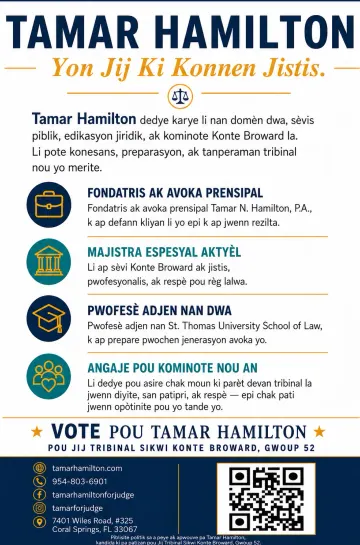
By writing each ad in the language, not translating an English ad word for word. About 7.11 million Floridians age 5 and older spoke a language other than English at home in 2024, according to USAFacts, which draws on the Census Bureau’s American Community Survey. The same page reports 512,329 Haitian speakers in Florida, 49.2 percent of all Haitian speakers in the United States.
Practical points for multilingual immigration ads:
- Required statements travel with the ad. Under Rule 4-7.12(c), the Bar-required wording appears in each language the ad uses.
- Have a native speaker review every ad. Spanish and Haitian Creole vary by country and community, and a word that is plain in one place can be wrong in another.
- File with a translation. For an ad that must be filed, the Bar requires an accurate English translation.
- Say plainly that you are a licensed attorney. USCIS warns that in the United States a notario publico is not authorized to provide immigration legal services, although in many Spanish-speaking countries notarios are attorneys. A clear statement that your firm is a law firm, with the lawyer’s name, helps a reader tell the difference.
- Match the channel to the language. Video explainers in Haitian Creole and short Spanish posts suit different viewers.
We produced video ads in English and Haitian Creole for Claxton Law Group on immigration topics. Christian Gonzalez, founder of Advocacy Aces, is also Co-Founder and CMO of Claxton Law Group. Another firm’s needs will differ, so we start from your matters and your community.
Which advertising channels fit an immigration firm?
It depends on what a person is doing when they see you. The table separates channels by intent.
| Channel | How it works | Points to check |
|---|---|---|
| Google Search ads | You pay when someone clicks, under cost-per-click bidding | Paid search is subject to Bar rules. Start the ad with the firm or lawyer name, and do not use another firm’s name in a way that implies affiliation |
| Local Services Ads | Google charges for each valid lead, and lists the firm after screening | Needs owner identity verification and state bar license checks. Read our comparison of Google Ads and Local Services Ads for immigration lawyers |
| Meta (Facebook and Instagram) | Targeted ads and video to people by location, language and interest | Ads about immigration can fall under Meta’s social issues rules. Check the current policy before launching, and see below |
| Video | Short explainers in the client’s language | Same Bar rules, and the filing rules for paid placements |
| Email and text | Messages to people who have asked to hear from you | Contacting people who have not asked is covered by Rule 4-7.18, so ask counsel first |
None of these produces a guaranteed volume of inquiries, and we do not offer one. They are options to test against what your intake can handle.
Do Meta’s political ad rules affect immigration ads?
Possibly. Meta’s list of U.S. social issues includes immigration, and ads about social issues, elections or politics need authorization and a “Paid for by” disclaimer under its policy. A law firm’s ad about its services is not automatically in that category, because Meta reviews each ad on its content. Our guide explains whether immigration firm ads need Meta’s political authorization.
Meta has said it will not allow new ads about social issues, elections or politics in the US from October 27 through November 3. Ads with a valid disclaimer that already delivered an impression before the window can keep running, and you can change their bid, budget, end date and on or off status, but not their creative or targeting. Read our guide to Meta’s political ad restriction period and confirm with Meta how your account is classified.
How should an immigration firm handle intake?
As part of the marketing, not an afterthought. An ad that leads to an unanswered phone is not working. A plan for intake covers:
- Who answers, and in which languages, at what hours.
- How quickly you reply to a web form, text or message.
- What the first call covers, so a person is not asked to repeat their story.
- A consistent consultation process, with a clear next step.
- Tracking where each inquiry came from, so you can compare channels by retained matters, not just by the number of inquiries.
For Local Services Ads, Google counts a call as a lead when you answer it or call back, or when a missed call during business hours lasts more than 20 seconds, so a missed call can still be charged. See our Google Ads vs Local Services Ads guide for how those leads are counted.
What should immigration firms avoid?
- Guaranty language. Words that promise approval, speed or a result, which Rule 4-7.13(b)(1) addresses. USCIS also warns about anyone who “guarantees” faster processing for a fee.
- Unverifiable claims such as “best,” “top” or “fastest,” which Rule 4-7.13(b)(3) limits unless objectively verifiable.
- Misleading testimonials. Check every testimonial against the rule’s list of limits.
- Implying you are the government, an official agency or an affiliate of one. USCIS lists government impersonators as a common scam.
- Using another firm’s name as a keyword that triggers an ad without clearly identifying your own firm first.
- Advertising practice areas you do not handle.
- Required statements in English only on a Spanish or Haitian Creole ad.
What should the first 90 days look like?
A short sequence works better than launching everything at once:
- Choose two or three matter types you want more of, and write one page for each in each language you serve.
- Verify your Google Business Profile and begin Local Services Ads verification, which Google says takes 3 to 4 weeks on average.
- Set up intake and call tracking so every inquiry is labeled by source and matter.
- Launch a small search campaign for those matters with Bar-compliant ad text.
- Add one video or social series on a single matter, in the client’s language.
- Review inquiries and retained matters each month, and adjust.
How can Advocacy Aces help?
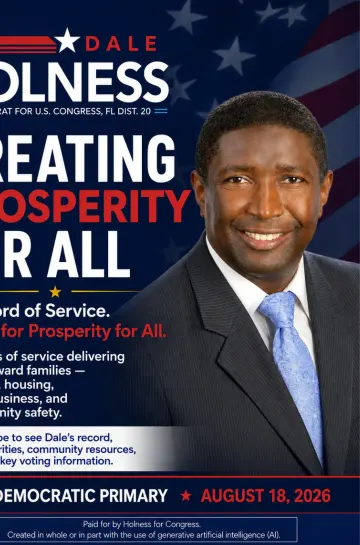
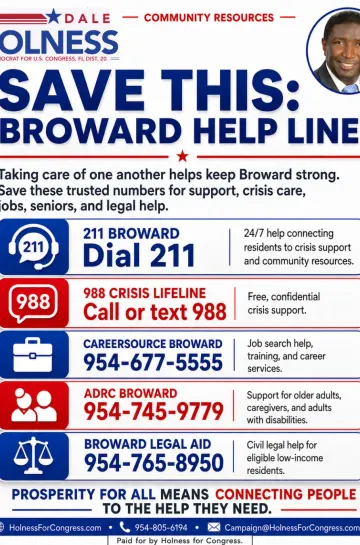
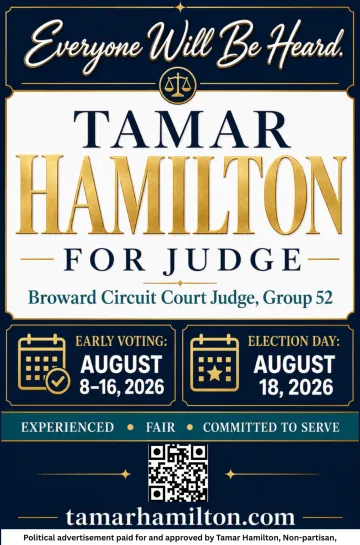
Advocacy Aces is a digital marketing agency for law firms and political campaigns in South Florida, working in English, Spanish and Haitian Creole. For an immigration firm we build the website and matter pages, write and produce the ads and video, and set up the tracking. We do not give legal advice. Your responsible lawyer reviews each ad against the Bar rules, and we build the approved version.
For a firm hiring an agency in Fort Lauderdale or Broward County, see law firm marketing in Broward County. The South Florida overview is law firm marketing.
If you want to talk through which matters and channels to start with, Schedule Consultation
This article is marketing guidance, not legal advice. Election, platform and bar rules change, so confirm the details with your campaign counsel, filing officer or bar before you rely on them.